GAMEBOOKS · READING GUIDE
How to choose your first gamebook
From rules to imaginary worlds, find an interactive adventure that makes you want to choose what happens next.
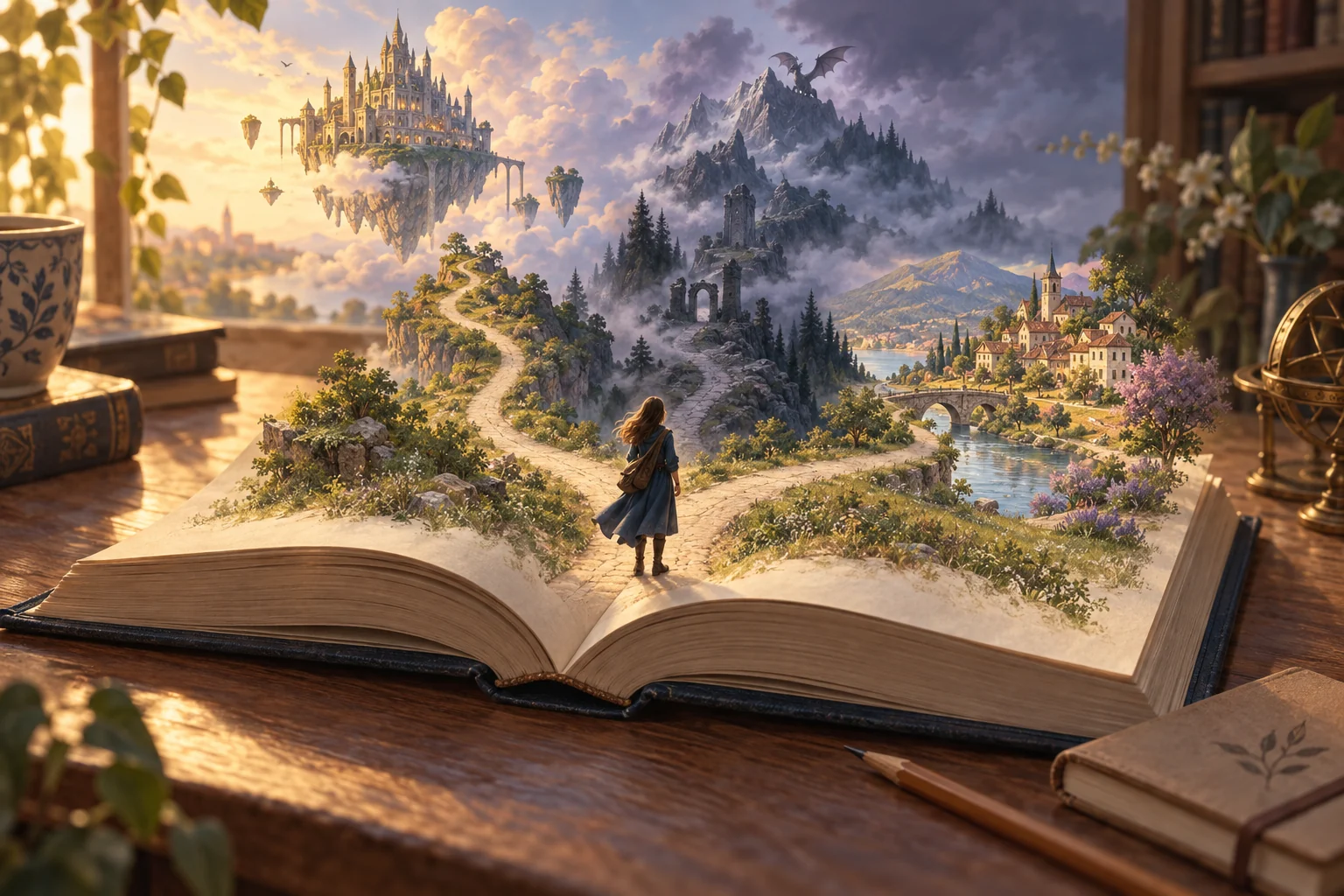
A gamebook turns reading into a personal adventure: you choose a direction, take a risk and discover what follows. But how do you choose a first gamebook that makes you want to keep going? The best starting point depends on the stories you enjoy, your appetite for rules and the time you want to spend on each reading session.
This guide explains how to compare the options without getting lost in technical details. It includes a practical checklist, a small imagined situation to try and three adventures from Nicolas Marty’s catalogue. The aim is to find a story you genuinely want to explore, then understand how to begin. The three featured gamebooks are currently available in French; their linked presentations explain them in English.
What is a gamebook?
In a conventional novel, chapters follow an order set by the author. In a branching gamebook, the story regularly offers several possible actions. You follow the reference attached to your choice and continue from that passage. Two people can therefore encounter different situations in the same book. France’s Bibliothèque publique d’information describes this meeting of storytelling and play, which may also involve rules, possessions or dice.
Those elements are not all compulsory. Some books concentrate on decisions and clues; others ask you to track resources or resolve challenges. Before buying, separate two questions: “Does this world interest me?” and “Will I enjoy playing this way?” A beautiful cover can create an initial spark, but the rules and a sample of the writing tell you more about the experience. Look at both before deciding.
Five ways to choose your first gamebook
1. Start with an atmosphere you already enjoy
A fantasy journey, an investigation and a gentle imaginary world create different feelings. Think about the scene that would make you want to stay: crossing a floating city, protecting a companion or looking around a shop full of peculiar objects. That curiosity is more useful than an abstract list of game mechanics. Read the introduction, look at the illustrations and check the tone. Choosing something familiar in mood can make an unfamiliar format easier to approach.
2. Separate decisions from game rules
A book without dice can involve demanding choices; a book with dice can explain its rules clearly. Look at what you actually need to record: possessions, abilities, supplies, clues or relationships. As a beginner, choose a system you feel willing to learn. You do not have to find the simplest possible book, but it helps to avoid one whose procedures put you off before the opening scene. Read the setup instructions when an available preview includes them.
3. Check how comfortable the reading feels
Passage length, vocabulary and page density matter as much as the difficulty of the decisions. When choosing a gamebook for a child, look at an extract and the edition’s guidance. Cute artwork does not automatically mean that the text suits a beginning reader. Consider whether the book will be read independently, with another person or aloud. A story that feels demanding alone may be an enjoyable shared experience, provided everyone likes its themes.
4. Check the equipment and edition
Some adventures require only a pencil; others use several dice. Prepare the equipment the book specifies, without assuming accessories are included. For a digital edition, check how passage references appear in any available sample. With a paper copy, bookmarks can help you find the rules and record sheet again. Choose a format you will enjoy using at home or while travelling, and always check the edition’s language before ordering.
5. Be willing to leave some paths unexplored
A branching story gains some of its appeal from the routes you did not take. Your first attempt does not need to reveal every scene. If you enjoy comparing the consequences of decisions, replaying may be part of the attraction. If you would rather follow a continuous story, a novel could be a better fit. Les Cinq Reliques, a fantasy and science-fiction novel, offers that alternative in the catalogue, with an English presentation of the French book.
Three interactive adventures by Nicolas Marty
The following books suit different interests. They are not a universal ranking: their illustrated presentations help you compare worlds and ways of playing. All three currently have French editions, so an English-speaking reader should be comfortable reading French or sharing the text with someone who is.
A floating city and musical abilities
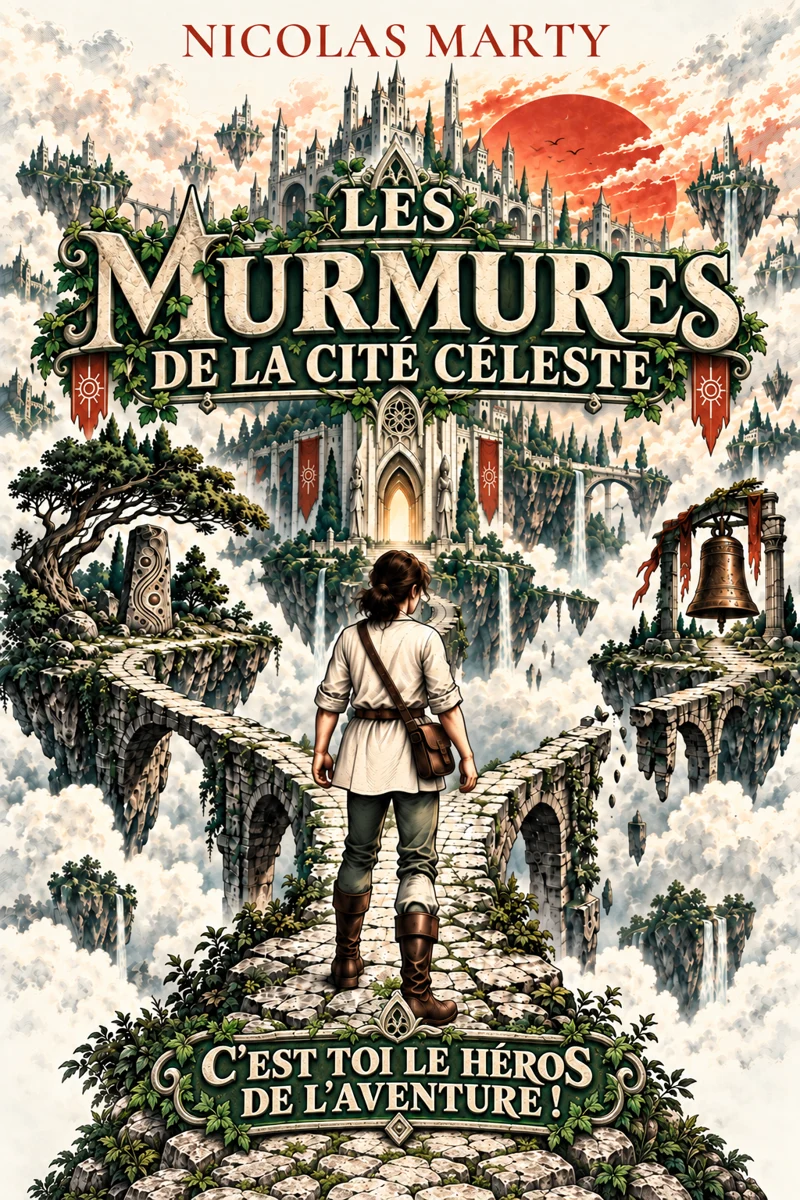
In Les Murmures de la Cité Céleste, you become Lyrian, heir to the Guardians of the Song. Music holds the islands above an ocean of mist, but their balance is failing. You begin by choosing three Melodies from five, and you need a pencil and two six-sided dice. This gamebook is worth exploring if floating cities, a choice of abilities and the fragile balance of an imaginary world catch your interest.
A journey with companions, without dice
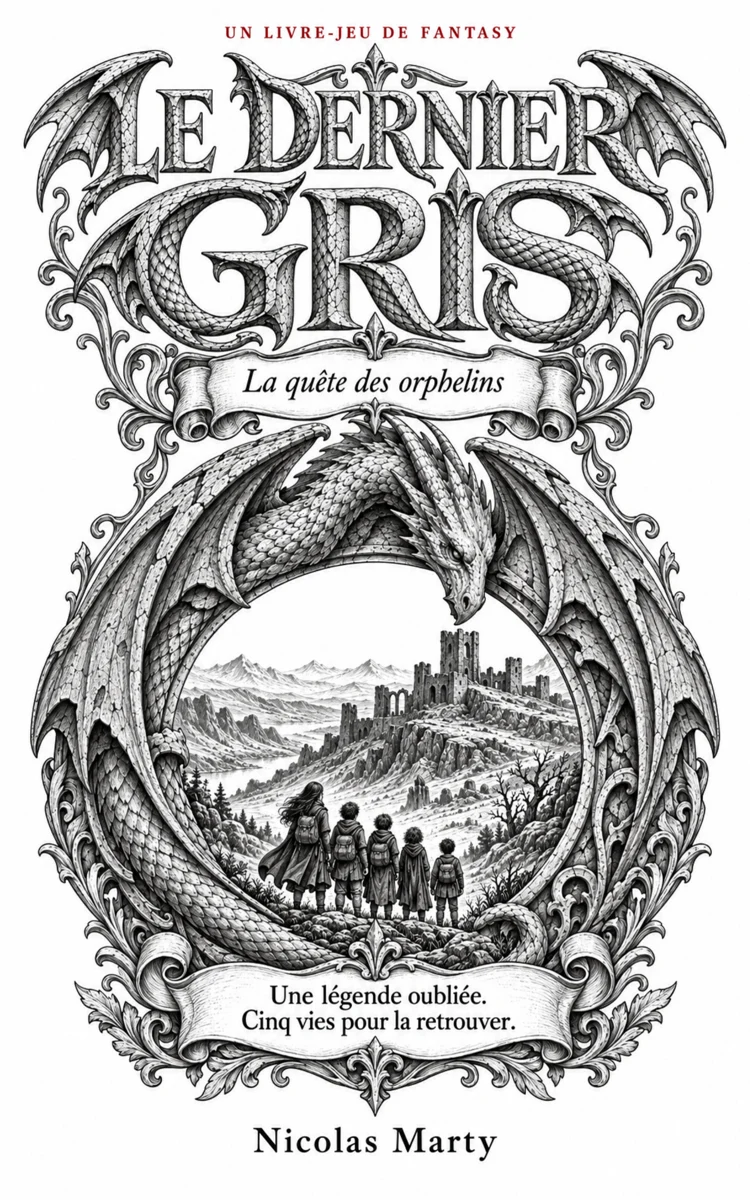
Lou and four companions follow the trace of a small grey dragon through kingdoms marked by a long war. Supplies, trust and group decisions matter along the way. Le Dernier Gris, a gamebook without dice, includes five endings, forty engravings and a map. Its point of entry is a shared journey: how can you move forward while caring for the people travelling with you? The illustrated presentation introduces the setting before you choose the French edition.
Looking closely at a kawaii town
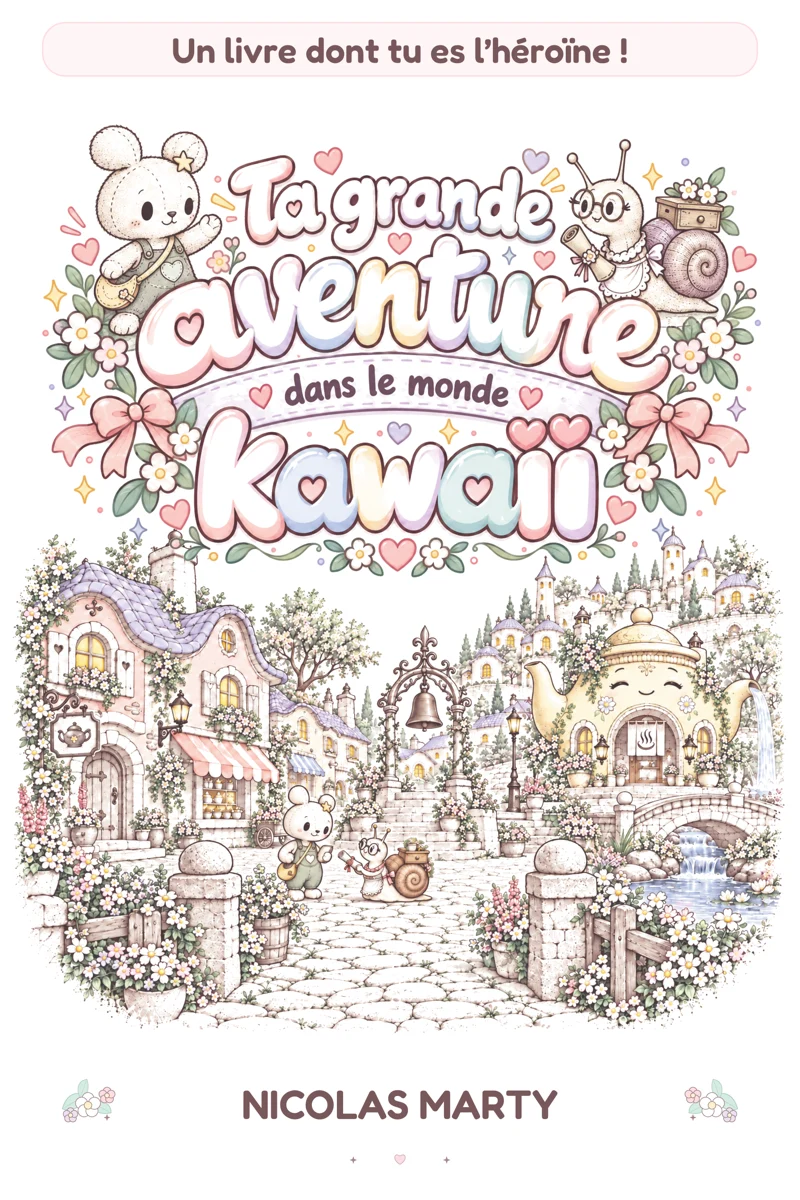
In Miette’s adventure in the kawaii world of Pompon-les-Bains, you play a repairer of small catastrophes. Objects are rebelling and the great bell has lost its clapper. Listen to residents, notice details and gather observations as the paths unfold. Despite its gentle appearance, this standalone branching gamebook is intended for readers comfortable with a long text. Its kawaii atmosphere describes a style of storytelling rather than a reading-age recommendation.
Make your first session easy to begin
Place the book, rules and required equipment within reach. Read the instructions first, then prepare your character as directed. Leave the first decisions until they appear in the story: looking through every possible outcome in advance can take away some of the surprise. When you pause, record your current passage and the information the book asks you to keep. A simple note can make returning to the adventure much more comfortable.
Try this invented situation, separate from the books featured here. A locked door blocks your path and a light shines upstairs. Would you knock, look for another entrance or wait and observe? There is no hidden correct answer in this example. The point is to notice what attracts you: acting quickly, exploring or collecting clues. That preference can help you choose the atmosphere of your next adventure, without turning the choice into a personality test.
To read with someone else, decide who will read aloud and let each person explain the action they favour. You can alternate decisions or agree before continuing. Keep one shared record of possessions and events so the story remains easy to follow. For a child who is reluctant to read alone, shared reading is one approach to try; our guide to encouraging children to enjoy reading without pressure offers other starting points.
Common questions about gamebooks
Do you need experience with role-playing games?
Not necessarily. Start with the book’s own explanations and check the equipment it requires. Approach a standalone adventure using its rules rather than importing rules from another game. If an instruction is unclear, return to the example before moving on. Familiarity can grow as you play.
Can you read a gamebook more than once?
Yes, you can begin again and try different decisions. The number of routes and variety of endings depend on the individual book. Reset to the starting conditions rather than combining resources from several attempts, unless the rules explicitly allow it. Replaying is an option, not an obligation to discover everything.
Should you choose a gamebook or a novel?
Choose a gamebook when you want to participate in decisions, and a novel when you want a continuous narrative to guide you. You can enjoy both at different times. The complete catalogue of Nicolas Marty’s novels and gamebooks lets you compare their illustrated presentations and check which languages are available before following an Amazon link.