ARTIFICIAL INTELLIGENCE · GETTING STARTED
How to choose an artificial intelligence book for beginners
Understand the basics, try a prompt and check the result: a practical route into AI at your own pace.

An artificial intelligence book for beginners should help you understand the tool you are using, give it a useful instruction and assess the answer. You do not have to start with equations or a long list of applications. A better starting point is a small problem you would like to solve more clearly.
Planning a fictional meeting, organizing ideas or improving a rough draft gives your first concepts a practical purpose. This guide offers a way to choose a book, a worked prompt and seven short practice sessions. It also introduces Nicolas Marty’s AI books, with a clear distinction between published editions and books that are still forthcoming.
Before choosing an AI book, decide what you want to learn
“Learning AI” can mean several things. You might want to understand conversations around you, use an assistant for everyday activities or study how models are programmed. One book will not necessarily serve all three goals. Before comparing covers, finish this sentence: “After reading, I would like to be able to…” Use an action you can observe.
You might want to explain a generative assistant to a friend, turn rough notes into a clear outline or compare a response against a supplied document. If your goal is coding, write that down as well. A general introduction can provide context, but it will not replace a manual for the language or technique you want to learn.
Use your sentence as a filter when reading the contents page. Which chapters bring you closer to that action? Interesting but less relevant topics can wait. Completing a coherent learning path and reusing two methods may be more valuable than skimming twenty subjects without trying anything.
Which concepts does a beginner need first?
Artificial intelligence is broader than conversational assistants. When you use a system that produces text or an image from an instruction, you are encountering generative AI. For an initial practical reading path, four distinctions help make the experience easier to understand.
The model and the application
A model is one component of a system. The application adds an interface, features and sometimes access to tools or documents. Two services can therefore behave differently even when their chat boxes look similar. Check what your chosen application actually supports instead of assuming it includes every feature you have heard about.
The instruction and its context
Your prompt is the request. Context supplies information that makes the request meaningful: the audience, starting material, constraints and expected result. “Help me prepare a presentation” leaves many decisions open. Specifying the subject, listeners and available time provides a more useful starting point.
Fluent writing and verified information
A polished answer can contain an error. The French data protection authority’s guidance on generative AI discusses its limitations and the need to check its proposals. A beginner’s guide should teach you to inspect an answer as well as obtain one.
Assistance and the final decision
You can request options, a draft or another explanation while keeping the final decision yourself. This becomes concrete when you review a response. What do you accept, what do you change and what do you set aside because there is not enough evidence? A useful exercise gives you room to make those judgments.
How to recognize a good AI guide for your starting level
The word “simple” on a cover is not enough. Look at how the book organizes learning. An accessible introduction starts with a recognizable question, explains terms as they appear and provides an example you can inspect. It does not assume that you already know every abbreviation.
Next, look for progression. A short request, an initial result, a revision and a slightly larger exercise make a useful sequence. A large prompt collection can offer inspiration, but it becomes more instructive when the book explains why an instruction fits a particular situation and how to adapt it.
| Check | Ask yourself | What it tells you |
|---|---|---|
| Contents | Does the book move from basics towards practice? | Whether there is a clear learning path. |
| Examples | Can I repeat an exercise with fictional information? | Whether you can evaluate it yourself. |
| Verification | Does it explain how to find mistakes? | Whether it teaches useful review habits. |
| Prerequisites | Do I need programming or particular software? | Whether it matches your starting point. |
| Edition | Are the language and format right for me? | Which edition to select. |
Distinguish reusable methods from screenshots. Application menus may change. A book remains useful when it teaches you to define a task and check an outcome even after a button moves. For a specific feature, supplement your reading with the current documentation for the service you use.
Also consider how you like to learn. You may prefer an illustration followed by a short activity, or a longer explanation before trying anything. Read an available sample and notice whether you can restate the point in your own words. That is more informative than choosing solely by the number of topics advertised.
A worked prompt: turn a vague idea into a clear task
Imagine organizing a fictional reading workshop. Your first instruction might be: “Plan a fun workshop.” The assistant would have to guess the participants, available time and materials. Instead, describe the parameters you already know.
I am planning a 30-minute reading discovery workshop for six adults. We only have paper and pencils. Suggest three stages, giving the duration and instructions for each one. The goal is for everyone to leave with an idea for their next reading experience. Do not invent book titles. Finish with two questions that would help adapt the workshop.
This request provides a setting, audience, time limit, resources and expected format. It also gives a constraint: do not invent titles. That instruction is not a guarantee. It provides something specific to check when the answer arrives. The exercise is useful because you can examine each part against explicit criteria.
After the first answer, try a focused revision instead of restarting everything: “The second activity seems too long. Reduce it to five minutes while keeping the total at thirty minutes.” Check the sum of the durations and whether every activity uses the available materials. The conversation becomes an editing process rather than a search for a perfect phrase.
Keep a small record of the initial request, the change and its effect. You will begin to see which details you often forget and which checks you still need to perform. That record can teach you more than a folder full of impressive-looking outputs.
How to check an AI answer without getting lost
Separate three questions: does the answer follow my request, are there facts I need to verify and does it actually help me move forward? It can satisfy the first question while failing the others. Your workshop plan might contain exactly three stages but run over the time limit.
When working from a document, compare the result with the original. A summary should preserve the important information without adding an unsupported date or promise. If the response cites an external source, open it and find the passage supporting the claim. A plausible title or address is not evidence that the source exists or says what the response attributes to it.
Mark parts of the answer “checked,” “needs correction” or “needs confirmation.” This makes your review visible and helps you decide what to do next. Asking the assistant to review its own answer may help identify a problem, but it does not replace an independent check.
Use fictional situations for your first exercises. The CNIL advises against sharing confidential information with public services. Invented names and documents let you practise your method without introducing personal files or workplace records into the tool.
Learn AI through seven short practice sessions
The following is an original practice plan to accompany your reading. It is not a reproduction of a book’s contents and does not promise mastery in a week. Each session can be short, and you can repeat any of them. Aim to finish with a result you know how to examine.
- Choose one task. Write down a simple activity and what a successful result would look like. An outline for a fictional presentation is easier to assess than “become more productive.”
- Add context. Write a short request and a version specifying its audience and constraints. Compare the assumptions made in the two answers.
- Request a useful format. Ask for a list and then a table using the same information. Choose whichever presentation helps you understand or act.
- Revise a draft. Supply a few invented sentences and ask for a clearer version. Check that the facts and intention have stayed the same.
- Inspect a summary. Use a short document you wrote yourself. Identify what the summary kept, left out or added.
- Build a small project. Combine an instruction, draft, revision and final review to produce something simple, such as a workshop sheet.
- Review the experience. Note what the tool contributed, what you had to fix and what you prefer to continue doing yourself.
This final review prevents you from judging the tool only by how impressive its first answer sounds. It also helps you select the next chapter. Work on instructions if the task remains unclear, verification if you miss errors, or projects if you can already check outputs but struggle to connect several steps.
You do not have to increase the complexity every time. Repeating a familiar task with a different audience can be instructive. For example, a workshop for beginners needs different explanations from one for experienced readers. Compare the revision with your intention rather than simply accepting the change because the wording is different.
Three routes through Nicolas Marty’s AI books
The books in the catalogue do not all answer the same question. Think of them as three directions: practical use, clearer dialogue with an assistant and reflection on changes in working life. Each book presentation identifies the relevant editions and languages.
AI Made Simple: a forthcoming practical guide
Intelligence artificielle — L’IA, simplement introduces an illustrated path through the basics, prompts, seven projects and a first exploration of agents. Its presentation is intended for readers who want to understand while trying things themselves. It shows the topics and artwork associated with this practical learning approach.
The original book is forthcoming, with English, Spanish, German and Italian editions also announced on the page. Publication dates and Amazon references will be added when available. The English edition uses the subtitle AI made simple. Check the page for the status of the edition you want; an English presentation alone does not mean the book has already been published in English.
Artificial Intelligence — Conversing with AI
The Artificial Intelligence — Conversing with AI presentation introduces a book about the basics and formulating requests. Explore it if your main interest is improving the way you communicate with an assistant. The page links to the available English edition and lets you check other languages and formats.
Red Alert on Jobs: a wider view of work
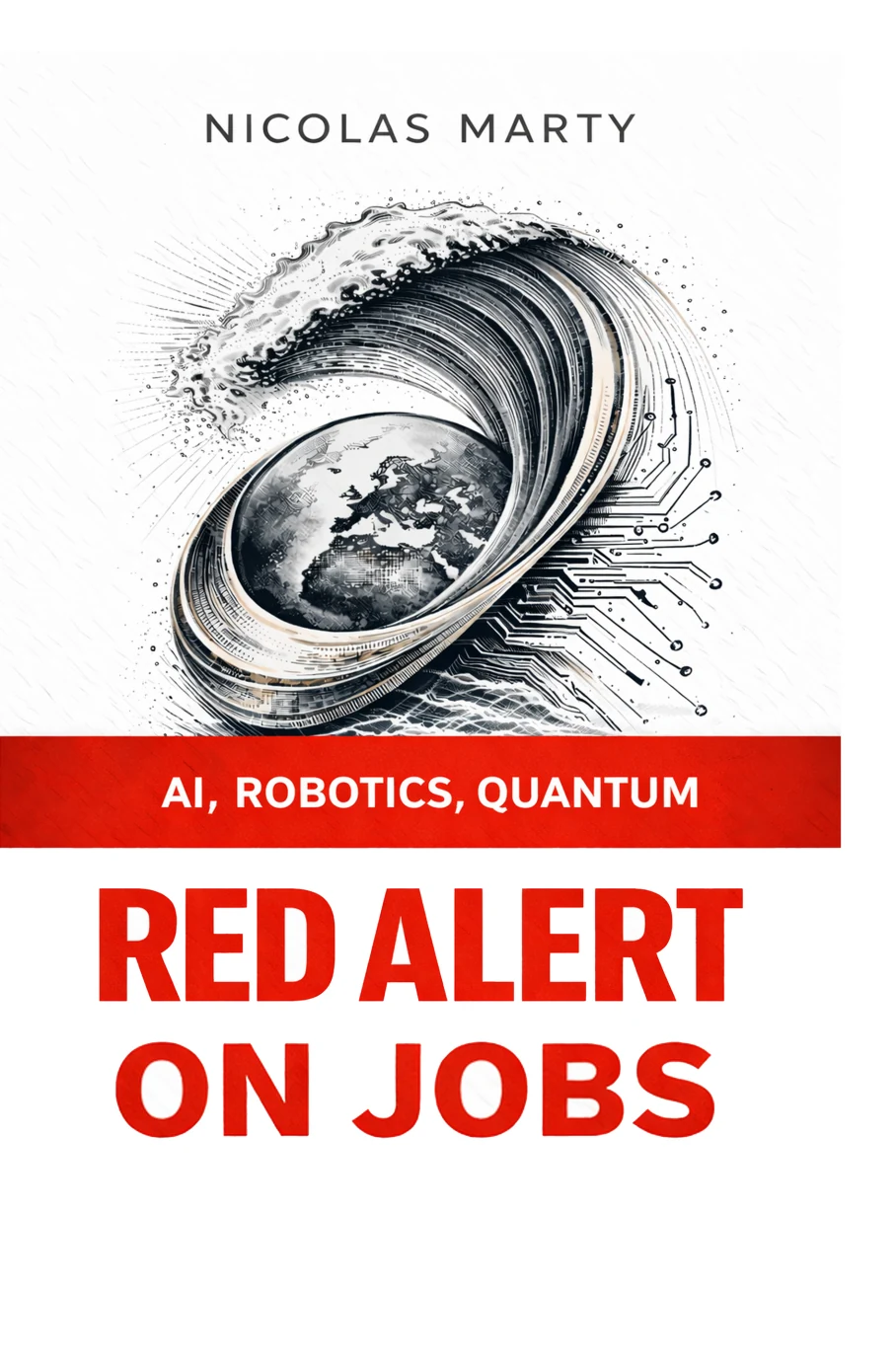
Red Alert on Jobs explores artificial intelligence, robotics, quantum computing and changes in working life. Its emphasis differs from a first-prompt workbook. It offers another direction when you want to connect tools with questions about occupations, skills and the organization of work.
When should you move from prompts to AI agents?
Before trying to automate several steps, consider whether you can describe them and assess the outcome. An assistant using tools can contribute to a longer task, but calling it an agent does not remove the need to define that task. Specify the accessible documents, permitted actions, expected deliverable and points requiring human review.
You can prepare without automating anything. Draw the route of a task on paper, from request to finished result. Circle the steps that require a check. If you do not yet know how to verify a short summary, practise that first. A clear review method will remain useful whichever tool you choose later.
Frequently asked questions about AI books for beginners
Do I need to know how to program?
Not to practise the activities described here: writing an instruction, checking an answer and understanding everyday uses. Programming becomes relevant for other goals. Choose a book whose prerequisites match what you want to learn.
Can a book remain useful when applications change?
Yes, when it teaches methods you can transfer, such as defining an objective, providing context and reviewing a result. Confirm interface details in the application’s current documentation.
What is the best artificial intelligence book for beginners?
There is no single answer independent of your goal. Compare the level, exercises and attention to verification. A sample and contents page help you judge whether the explanations suit you.
Is AI Made Simple available to order?
Its page currently identifies it as forthcoming. Publication references will appear when available. You can already explore the learning path and announced translations.
Return to your opening sentence: what do you want to be able to do? Browse the books on artificial intelligence and work, then keep one manageable exercise beside your reading. The useful outcome is being able to explain what you tried, what needed correction and what you learned.