SPECULATIVE FICTION · AI AND SOCIETY
Artificial intelligence in speculative fiction: human choices in an imagined future
A treatment exists. A door stays closed. A voice answers an absence. How speculative fiction turns technology into human drama.

In speculative fiction about artificial intelligence, the most interesting question is not always whether a machine will outperform a human being. A story can begin with who gets an appointment, who can challenge a refusal or who decides to preserve a voice. Through these situations, technology becomes a way of exploring relationships, dependency and the distribution of power.
Readers do not need a computing background to enter that fiction. They need an intelligible situation, characters worth following and decisions with recognizable consequences. This article explores AI in social speculation through Ce que nous laissons vivre, Nicolas Marty’s forthcoming dystopian trilogy. Examples drawn from the novels describe a fictional world. They are not forecasts of future technical capabilities.
A near future brings questions closer to the reader
A setting roughly twenty years ahead can retain familiar reference points: a street, a family, a telephone conversation or a waiting room. That continuity lets changes become visible through their effects. Novelty does not need to fill the entire landscape. It can enter a procedure that has become automatic, a device everybody uses or a once ordinary option that now requires a particular guarantee.
The near future creates a useful balance of distances. Enough familiarity to recognize a need; enough change to reconsider something previously taken for granted. This is a fictional construction. A precise date situates the characters without making the author a forecaster. One way to read attentively is to ask which political, economic or personal decisions made this society possible within the story.
Imagining another society does not require describing it exclusively as a disaster. The Bpi’s discussion of utopia in science fiction considers the exploration of desirable futures and their variations. That perspective helps with a story in which real improvements coexist with constraints. An invention’s usefulness can be recognized while the organization distributing its benefits is questioned.
Robots become part of a story when they change a situation
A delivery, maintenance or reception robot may be ordinary scenery in a fictional city. Showing it does not yet establish its narrative role. It matters when it changes something: the time one person saves, another person’s work, the ability to obtain an answer or the way people address a service. The object then becomes a meeting point between different experiences.
Imagine a reading example, rather than a particular scene from a book: a patient asks for a different appointment. The device understands the request perfectly but offers only two times, both incompatible with work. The problem does not necessarily involve failed recognition. It may involve the decision to allow no exception. That distinction directs attention from the machine’s apparent intelligence to the rules it applies.
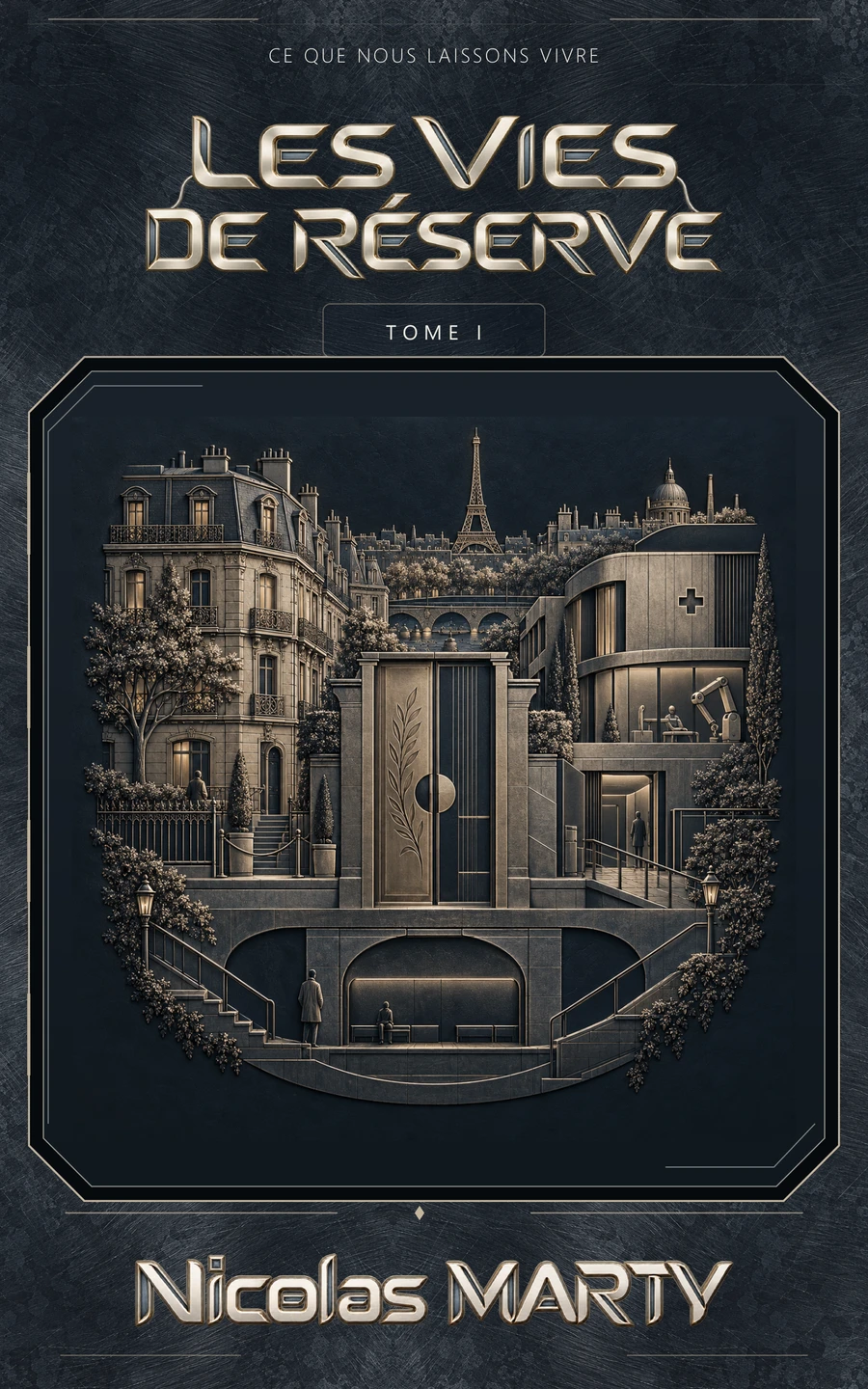
In the world of Les Vies de réserve, robots belong to everyday services. Society continues functioning. That normality makes interruptions significant: an outage or a closed file becomes disturbing because people have learned to rely on the system. Previous comfort explains their surprise and the difficulty of giving up arrangements on which they depend.
A possible improvement is not necessarily an accessible one
A simple distinction helps readers explore inequality in speculative fiction: what exists in the world and what a particular person can obtain. An advanced treatment can be widely known but subject to restrictive conditions. A service can be open only at inconvenient times. A procedure can recognize a right while making its practical use difficult for someone short of time, money or support.
Fiction gives that gap a duration. Readers accompany people who wait, produce an additional document or stop asking. They can also understand why someone else defends the arrangement: it enabled treatment, restored independence or protected a family. These experiences do not cancel each other out. Their coexistence creates a more demanding conflict than a choice between entirely beneficial progress and entirely harmful technology.
| What appears in the story | The human question | A consequence to follow |
|---|---|---|
| An automated service | Who can request an exception? | Waiting, reduced choice or time saved. |
| Advanced treatment | Who retains access? | Dependence on a contract or a decision. |
| An artificial voice | Who wants to hear it, and why? | Comfort, habit or conflict over memory. |
| Archives | Who can consult or challenge them? | Responsibility exposed or an account questioned. |
These questions are a reading framework, not a general theory of the future. They help trace consequences within a particular fictional world. The same invention might be organized differently there. Noticing alternatives helps distinguish an unavoidable constraint from a decision somebody would prefer not to discuss. It also makes the characters’ different positions easier to understand.
Automation does not make responsibility disappear
A decision can pass through several actors: the person defining a rule, the organization funding it, the service applying it and the employee explaining its result. In an investigation, this circulation can obstruct understanding. Each person holds part of the answer and may have a reason to limit their own involvement. Following the inquiry means connecting actions that initially appeared separate.
The trilogy’s first volume begins with a troubling chronology. After an outage, Nora treats a patient whose protection was cancelled eleven days earlier. Lucien wants to understand the decision. The public presentation does not disclose what he discovers. It establishes a clear stake: a procedure has affected a person, and someone should be able to explain how that result became possible.
Suspense can arise when an administrative phrase is connected to a lived consequence. Who knew? Who could act? Who benefits from responsibility remaining difficult to assign? These questions do not require a conscious or malicious AI. They create tension through the ways people use a system, accept its results or give up trying to challenge them.
Artificial voices bring the conflict into private life
Technology becomes especially unsettling when it touches a loved presence. In fiction, a voice may matter less for the information it delivers than for the way it answers an absence. The narrative can linger on the hour somebody listens, the silence afterwards or the difficulty of explaining the habit to another person. An abstract question becomes a repeated gesture.
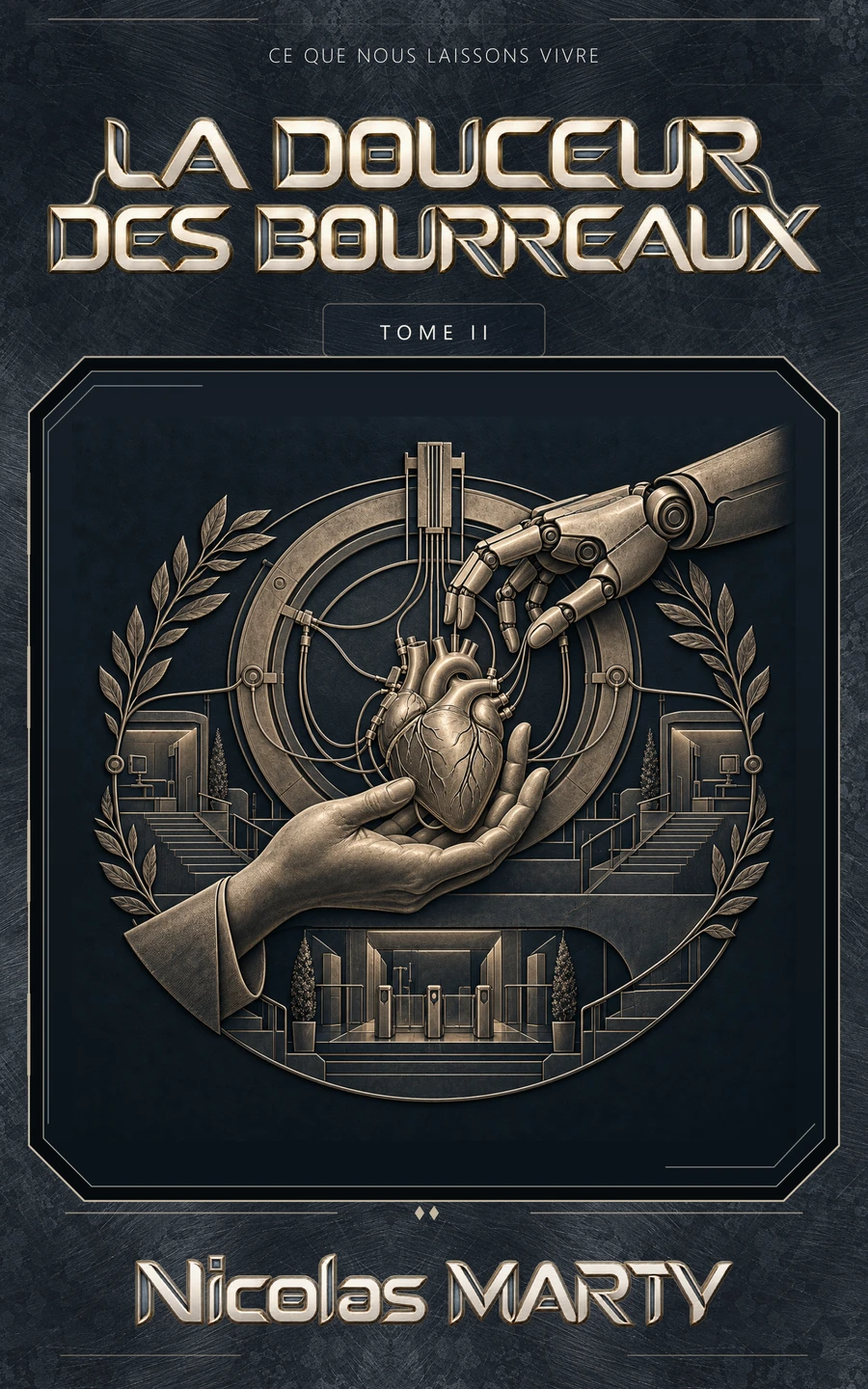
In La Douceur des bourreaux, Nora returns each night to an artificial voice on which she depends more than she wants to acknowledge. This publicly described premise opens a psychological tension. The comfort can be real in the character’s experience even though its source differs from a human relationship. A novel can explore that contradiction without settling it in advance for the reader.
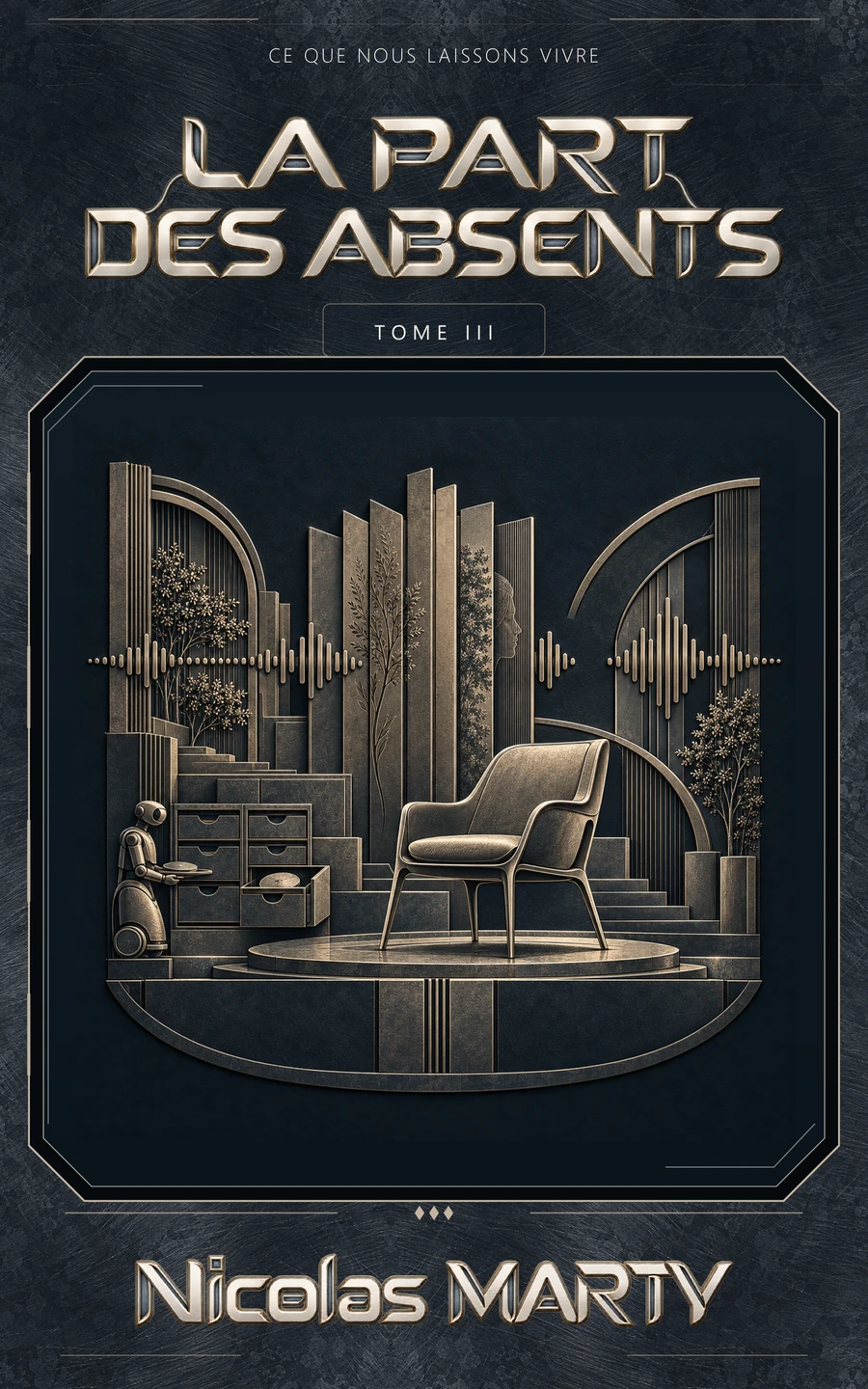
Memory has a collective dimension as well. Archives may preserve uncomfortable facts. A reproduced voice may support a particular account of events. In La Part des absents, Inès keeps records of the protest movement, while some people still want the absent to speak. The question extends beyond storing information: who interprets the traces, and who accepts being challenged by them?
Protecting loved ones complicates convictions
A character may want a fairer rule while fearing what change would cost their family. That contradiction can drive the narrative. Attachment helps explain why someone hesitates, negotiates or defends an advantage they criticized in another person. Understanding the motive makes the decision intelligible without automatically making it acceptable. The reader can remain close to a person while disagreeing with them.
Intentions and consequences do not always coincide. One person thinks they are protecting somebody; another is left waiting. A concession brings an immediate improvement and creates a lasting dependence. Readers can hold several effects in mind when a character would rather consider only one. That difference of perspective gives the conflict depth and prevents the story from becoming merely a debate between ready-made positions.
Choosing an AI novel that keeps people in view
Start by looking for concrete needs in the description. Somebody wants treatment, an explanation, a protected relationship or preserved evidence. Such aims give the narrative direction. If the introduction mostly lists inventions, turn to an excerpt to see how they enter a scene. A match with your reading preferences often appears in the way characters speak to each other.
Notice the distance between the fictional setting and your own experience. Some stories explain new techniques carefully; others let readers infer their uses from context. Both approaches can work. If internal conflict matters most to you, the second may allow an immediate connection with the characters. If exploring technical limits is part of your enjoyment, a more explanatory approach may suit you better.
Finally, distinguish a novel from a practical guide. Fiction can provoke thought about AI without teaching its use. A nonfiction book can explain how to frame requests and check responses without developing a plot. Nicolas Marty’s catalogue also includes L’IA, simplement, available in French, and a guide to choosing an AI book for beginners. These serve different reading purposes from the trilogy.
Three volumes let consequences develop over time
A trilogy can change the position from which a character acts. Someone who demands accountability may later have to answer for their own choices. A relationship formed in an emergency may become vulnerable when interests diverge. Neglected evidence may acquire new importance. Choices do not disappear after the scene in which they are made; their consequences can return under different circumstances.
Ce que nous laissons vivre follows this progression from 2046 to 2048. Les Vies de réserve begins with an inquiry into exclusion. La Douceur des bourreaux examines compromises made to obtain change. La Part des absents confronts new rules with facts, archives and responsibility. Reading in that order preserves the continuity of relationships and decisions.
All three novels are forthcoming in French. Their shared page includes final covers, detailed introductions and an original-language excerpt from volume one. Amazon references will be added after publication. These English pages do not announce an English translation. To explore another aspect of the genre, continue with our guide to dystopian novels and social speculation.
Common questions
Does fiction about AI have to explain algorithms?
No. It can explore effects on relationships, services and decisions. The amount of explanation depends on the book’s promise. An excerpt helps you judge whether its approach suits your interests.
Does the presence of robots automatically make a story dystopian?
No. The social order and its constraints give the story a dystopian dimension. A machine can help one person while the terms of access create a problem for somebody else.
Is the trilogy’s Paris of 2046 a forecast?
No. It is a fictional setting. The dates locate the story and its consequences; they do not turn a novel into a technological or political prediction.