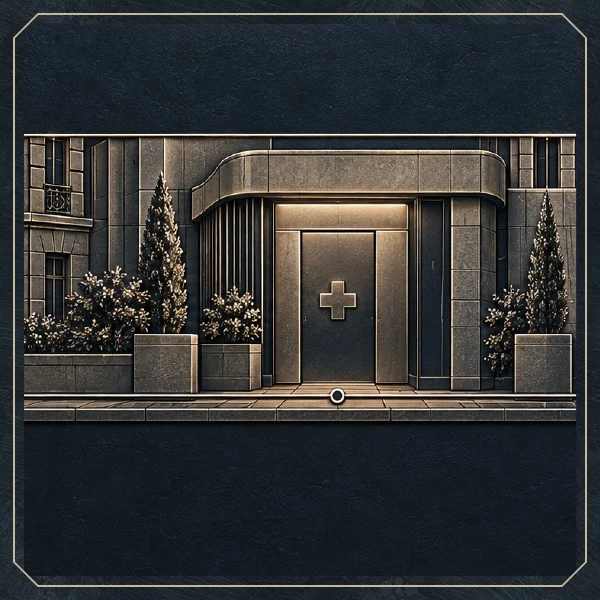
Everyday convenience
Automated services save time. Choosing an appointment, getting an explanation or speaking to a person remains less evenly distributed. Convenience can make dependency harder to see.

NICOLAS MARTY · DYSTOPIAN TRILOGY
Progress protects us.
But who comes first?
Paris, 2046–2048. Three novels of social speculation and psychological drama about the lives we protect, the truths we conceal and the people we love.
THE WORLD KEEPS TURNING
In 2046, robots are part of the scenery. They deliver meals, welcome patients and assist people who can no longer live alone. Medicine pushes its limits. The streets remain familiar, cafés stay open and people still work, fall in love and make plans. Keeping the contract that provides protection, however, has become decisive.
After an outage in Rive-Neuve, doctor Nora Delmas treats a woman whose protection was cancelled eleven days earlier. Lucien, her former husband, traces the decisions behind the cancellation. Their daughter Alma wants anger to be heard by a system that processes requests without listening. Garance, heir to the group under scrutiny, knows what she owes to the system she is being asked to expose.
Nicolas Marty follows their lives from 2046 to 2048. Inequality takes the form of a wait, a closed door or an exception granted to somebody else. Public choices enter family life; family attachments change what each person is willing to defend.
This is a fictional future. The illustrations evoke its setting and do not reproduce interior pages. This English presentation introduces three forthcoming French-language novels; no English edition is announced.

INSIDE THIS WORLD
Automated services save time. Choosing an appointment, getting an explanation or speaking to a person remains less evenly distributed. Convenience can make dependency harder to see.
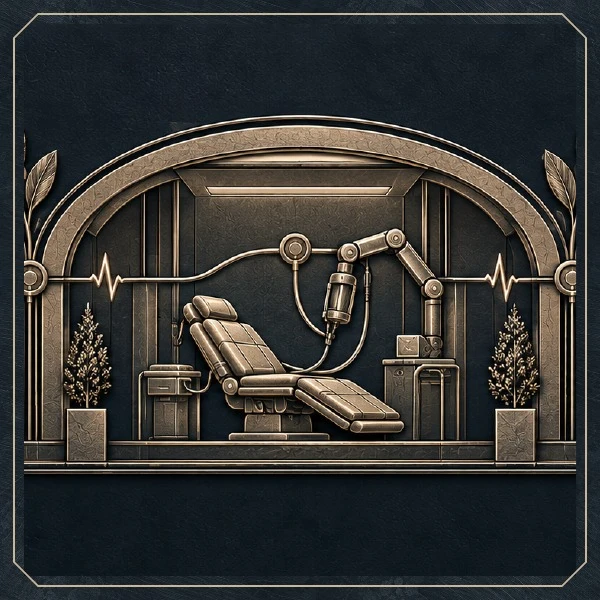
A treatment can exist without reaching the person who needs it. Guarantees, contracts and competing priorities give that boundary new force. Giving up an advantage can threaten someone close.

An artificial voice can ease absence and then make silence harder to bear. Memory becomes both private and political. Keeping a trace does not guarantee that its meaning remains intact.
ONE STORY IN THREE MOVEMENTS
Read in this order. All three French books are forthcoming; Amazon links will be added after publication.
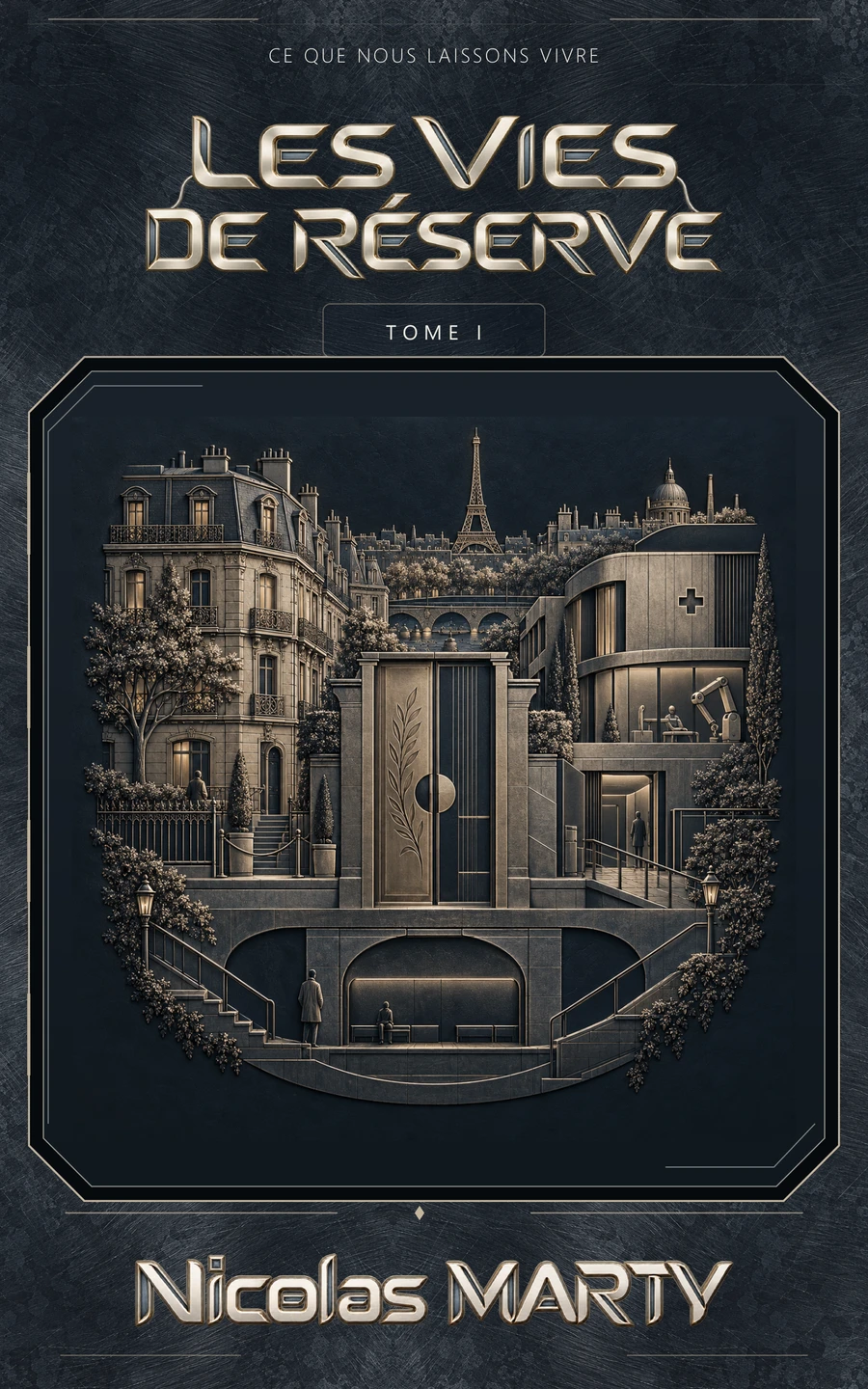
VOLUME 1 · 2046
Progress protects us. But who comes first?
Paris, 2046. After an outage in Rive-Neuve, Nora Delmas treats a woman whose protection was cancelled eleven days earlier. Lucien traces the decision. Alma wants the anger to be heard; Garance must decide what she can risk for the truth.
Coming soon · In French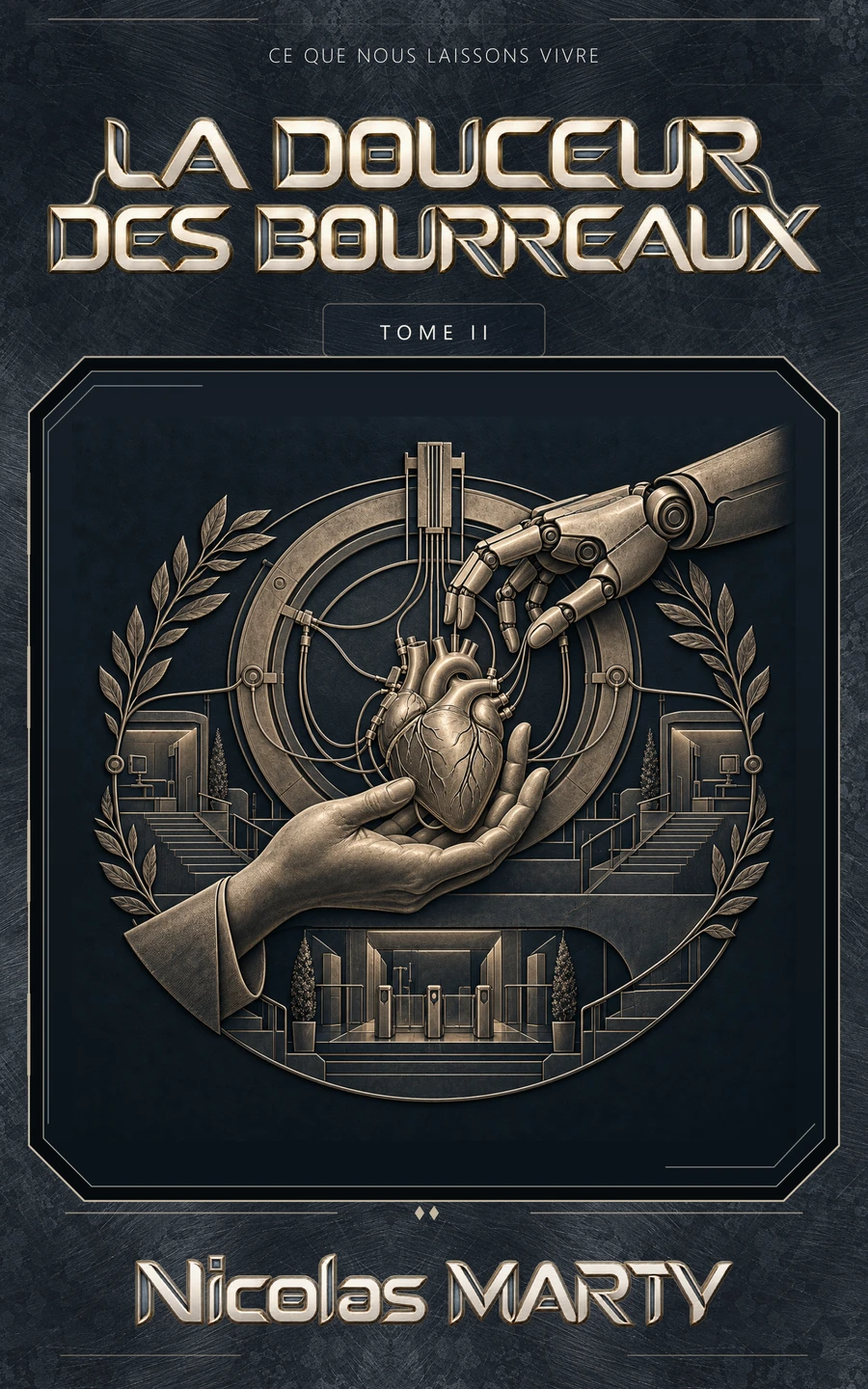
VOLUME 2 · 2047
They wanted to save lives. Power asks them to choose.
Paris, 2047. Alma wants to unite the protest movement; Garance wants her family’s group to yield. Nora continues treating patients and returns nightly to an artificial voice. As clinics become vulnerable, reasonable concessions carry costs for others.
Coming soon · In French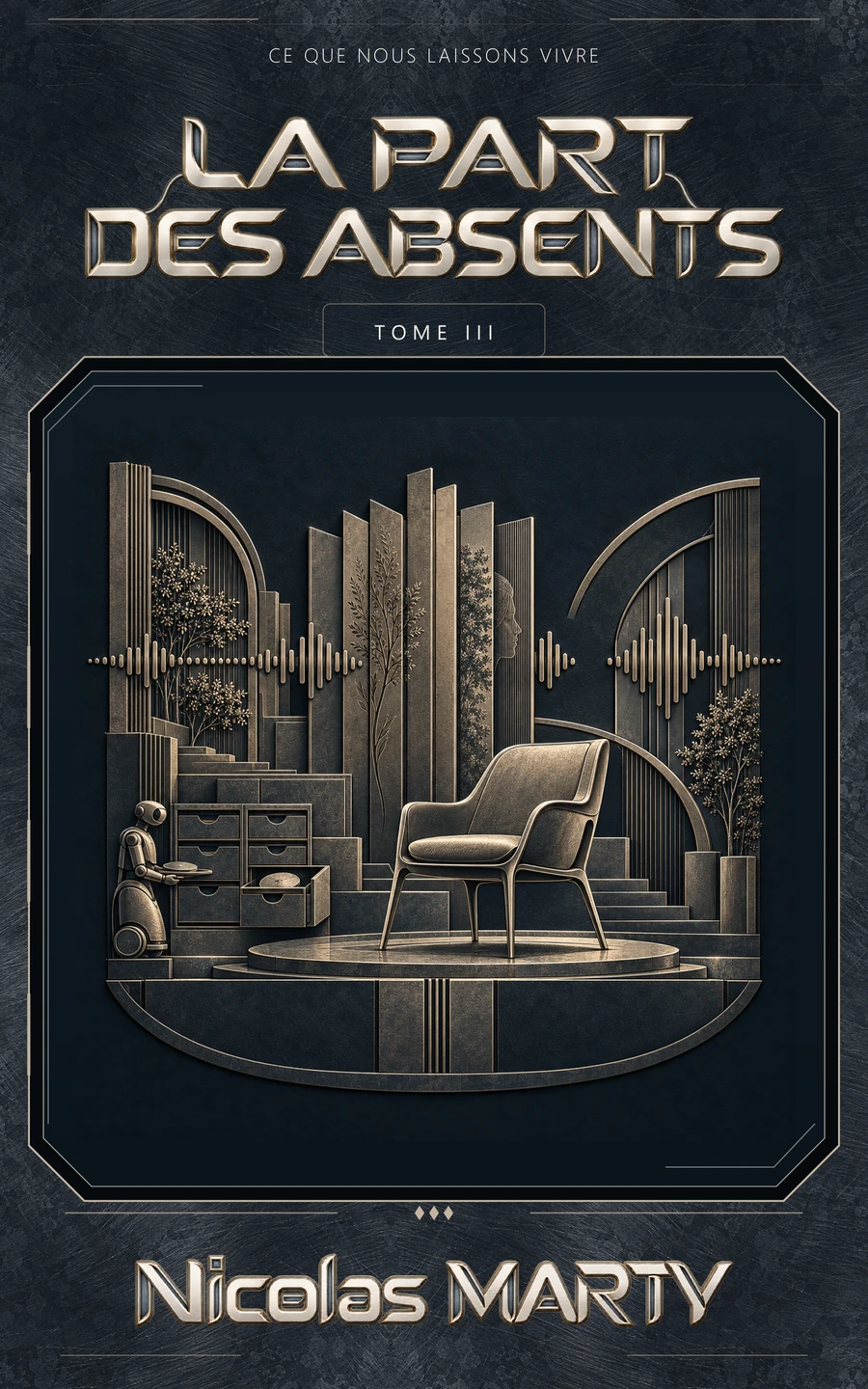
VOLUME 3 · 2048
They changed the rules. Who will answer for their choices?
Paris, 2048. Leading a new network, Alma discovers the weight of decisions. Garance negotiates the future of treatments while Inès preserves the protest archives. Evidence can now implicate the people who wanted to change the rules.
Coming soon · In FrenchPEOPLE BEFORE POSITIONS
A doctor, Nora treats the person in front of her. Files do not contain everything she sees or knows about her family. Her perspective connects care, family responsibilities and the difficulty of living with absence.
Nora’s former husband traces an administrative decision. He looks for responsibility behind procedures. His inquiry reaches into a family whose members do not all share the same reasons for acting.
Alma wants people weakened by poverty to have a voice. Organizing, negotiating and deciding require different abilities. Her journey examines the distance between conviction and responsibility.
Heir to the group under scrutiny, Garance knows her family’s instruments of pressure. She also knows what treatment makes possible. Her commitment cannot be separated from the things that protect her.
Inès preserves the protest archives. Keeping evidence becomes a choice when it can trouble her own side. Her role gives the question of loyalty to the facts a concrete place in the story.

AN INTIMATE DRAMA
A character can recognize an injustice while depending on the arrangements that produce it. Someone can demand the truth and fear its consequences. Emotional attachments give decisions their weight, hesitation and contradictions. The conflict involves people who understand different parts of the same situation.
The trilogy is intended for adult readers who enjoy multiple viewpoints, family secrets and moral dilemmas. Technology changes daily life, while the attention stays with people, their conversations and the things they can no longer say to each other.
LES VIES DE RÉSERVE · OPENING LINES
The following excerpt is in the book’s original French.
La femme avait posé ses chaussures sur le ventre.
Nora les regarda avant de regarder son visage : deux sandales blanches, la bride gauche retenue par du fil bleu. Le brancard touchait presque celui du voisin. Pour faire passer le chariot de soins, on avait repoussé les chaises contre les anciens casiers de l’école, et les personnes valides s’étaient mises à tenir leurs sacs entre les genoux. Dans la salle voisine, quelqu’un demandait un chargeur de téléphone. Il avait essayé de le demander doucement trois fois.
— Vous pouvez les mettre à côté de vous, dit Nora.
Excerpt from “Le dossier de Madeleine”, reproduced from the author’s supplied manuscript.
Explore volume one →BEFORE YOU READ
All three volumes are forthcoming in French. Dates, formats and Amazon references will be added when the editions are published. No preorder is offered here.
They form one continuing story. Start with Les Vies de réserve, continue with La Douceur des bourreaux and finish with La Part des absents.
No. Technology belongs to the characters’ world. Its implications emerge through everyday situations: obtaining care, challenging a decision, preserving a memory or keeping a promise.
The trilogy depicts a society that continues functioning. It explores unequal access to progress, dependency and the psychological consequences of collective choices.
EXPLORE THESE THEMES