DYSTOPIA · A READING GUIDE
Dystopian novels: understanding the genre and choosing a story
A city can work while closing doors. Explore what dystopian fiction reveals about rules, inequality and human choices.

A dystopian novel can be unsettling without showing a ruined city. An appointment nobody can change, an essential service restricted to certain contracts or an automated refusal that cannot be challenged may be enough. The reader then faces a practical question: how do people continue working, loving and making choices when the rules that protect them also restrict their lives?
Choosing a dystopian book therefore involves more than choosing a futuristic setting. Characters, the central conflict and the shape of the narrative matter too. This guide offers ways to recognize social speculation, distinguish different reading experiences and decide whether a continuing trilogy suits you. Its example is Ce que nous laissons vivre, three forthcoming French novels by Nicolas Marty. Their public presentations introduce the world without revealing the endings.
What makes a novel dystopian?
The French Larousse dictionary defines dystopia through an imagined society governed by totalitarian power or a harmful ideology. The useful emphasis is on social organization. A dark atmosphere alone does not explain the category: the way the society operates contributes to the difficulties its inhabitants face.
A novel turns that idea into situations. Someone may be prevented from speaking, travelling, sharing information or obtaining protection. Gradually, the reader discovers rules that make this restriction seem normal to the people administering it. Fiction gives those rules a human duration. A refusal is not just a proposition in a debate; it is something a character has to live with until the next morning and beyond.
Dystopian stories can establish power at different distances. Some present explicit prohibitions, a recognizable authority and organized resistance. Others explore constraints distributed through contracts, habits, dependence and compromise. When choosing a book, consider whether you want a clearly identified opponent or an injustice sustained by several people who do not all share the same intentions.
Dystopia, social speculation and the aftermath of catastrophe
These descriptions can appear together on a book cover, but they direct attention to different aspects of a story. Future-oriented speculation asks us to explore an imagined tomorrow. Dystopia emphasizes a harmful social order. A post-apocalyptic story usually places characters after a major rupture, facing what must be preserved or rebuilt. Psychological drama examines what a conflict does to a person. These are reading guides rather than sealed categories.
| Approach | A useful question | What to notice |
|---|---|---|
| Dystopian fiction | How do rules restrict lives? | Power and the possibility of refusal. |
| Social speculation | How do people live in this future? | Work, services, relationships and inequality. |
| Post-apocalyptic fiction | How do people continue after a rupture? | Resources, survival and reconstruction. |
| Psychological drama | What does the conflict do to someone? | Loyalty, guilt and private contradictions. |
A fictional future can also contain desirable possibilities. The Bibliothèque publique d’information’s discussion of utopia in science fiction explores variations between utopian and dystopian visions. That perspective helps avoid equating all science fiction with pessimism. A reader can recognize an invention’s benefits while questioning the way those benefits are distributed.
Why familiar daily life can become unsettling
A recognizable detail gives the reader a way into an unfamiliar society. We understand the inconvenience of a missed appointment, a missing document or an unexplained answer. Moved into a fictional future, that experience can reveal a new rule. An author does not need to explain an entire society at once. Waiting in a corridor may make a hierarchy tangible, especially when another person passes through the door without difficulty.
Comfort makes this tension more complicated. If deliveries arrive, streets are maintained and treatments work, characters have reasons to value their society. Discovering injustice does not automatically erase those attachments. The question becomes more difficult than deciding to escape: what can someone change without losing a treatment, a livelihood or the security of a loved one?
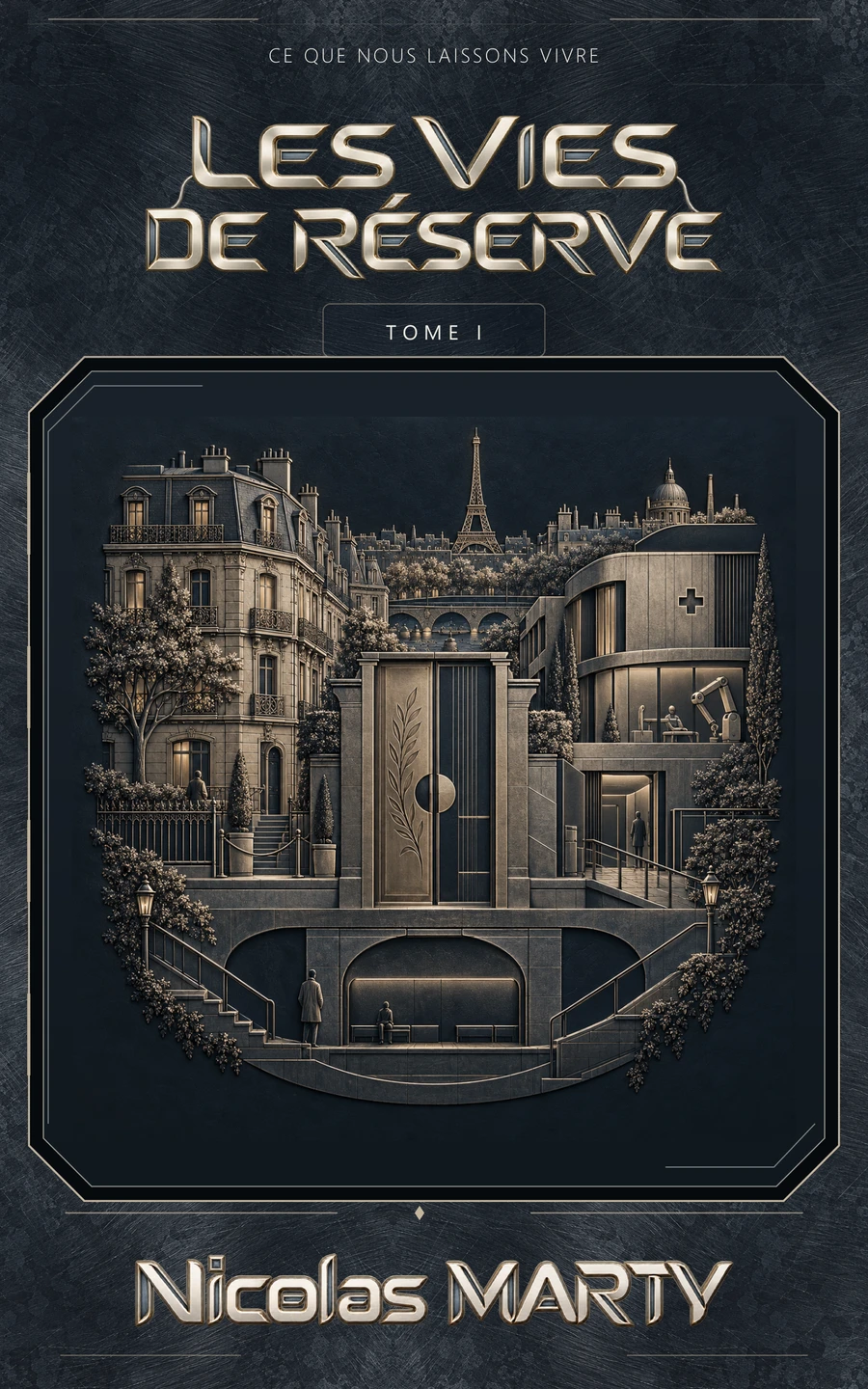
In Les Vies de réserve, that tension appears in the opening premise. After an outage in Rive-Neuve, Nora Delmas treats a woman whose protection was cancelled eleven days earlier. The problem has a face, a file and a chronology. Readers enter through an inquiry and discover what the procedures mean for people. This setting is an imagined future, not a claim about what society must become.
Psychological drama gives ideas their weight
A conviction can be easy to state while it costs nothing. In psychological fiction, interest often begins when a character must choose between things that matter. Revealing the truth might expose a relative. Giving up a privilege might threaten essential protection. Preserving a relationship might require postponing a complaint. Understanding the pressure behind a decision does not require approving the decision itself.
Conversations, silences and small gestures become important because they show what public statements leave out. Hesitation need not slow the story; it can reveal a dependence that makes the next action more significant. If you enjoy reconsidering your first judgment of a character, look for a presentation that gives contradictions room to develop rather than describing every person as an uncomplicated hero or villain.
Multiple viewpoints let readers compare the effects of one rule. What protects one person constrains another. What looks like a limited concession from an office can look like a serious loss from a waiting room. Changing perspectives broadens understanding while preserving uncertainty. Each character knows something the others do not, and each may prefer an account that makes it possible to continue.
How to choose a dystopian novel that suits you
Start with the central movement of the story
Does the description promise an escape, an investigation, collective resistance or a family conflict? That movement can tell you more than a list of themes. Two books involving artificial intelligence may offer very different pleasures: one follows a race against time, while another follows a changing relationship. Try summarizing the promise in one sentence: you will follow this person confronting this particular difficulty.
Look at the pace you enjoy
An excerpt helps establish the balance between action, dialogue and interior thought. Read a few pages and notice what holds your attention. Do you want to discover the next event, understand a reaction or remain inside an atmosphere? These preferences can overlap. They help identify the kind of suspense you enjoy without making a spectacular cover do all the work of selection.
Notice what technology does in the narrative
Technology may be explained in detail, used as a tool for action or treated as an ordinary part of the setting. If relationships are your main interest, notice whether the presentation describes people as precisely as inventions. If you enjoy testing the limits of a device, look for indications that its operation affects the plot. There is no universally correct balance between these approaches.
Check the format and publication status
A standalone novel and a trilogy ask for different kinds of commitment. A continuing story can allow consequences to develop beyond one volume and characters to change their position. Check the reading order and the actual availability of each book. A presentation page is not a preorder. On Ebook Corp, “Coming soon” means publication references will be added when they are confirmed.
Ce que nous laissons vivre: three stages of one conflict
Nicolas Marty’s forthcoming trilogy combines dystopian fiction, social speculation and psychological drama. It takes place in an imagined Paris between 2046 and 2048. Robots, advanced treatment and artificial voices belong to the characters’ daily lives. The central question remains human: how can someone challenge an unjust organization while loved ones still depend on it?
Les Vies de réserve starts an inquiry into cancelled protection. Nora treats patients, Lucien traces responsibility, Alma wants to give anger a collective voice and Garance faces the interests of her family’s group. The opening volume establishes attachments that will make later choices difficult. It is the recommended starting point even if another title initially attracts your attention.
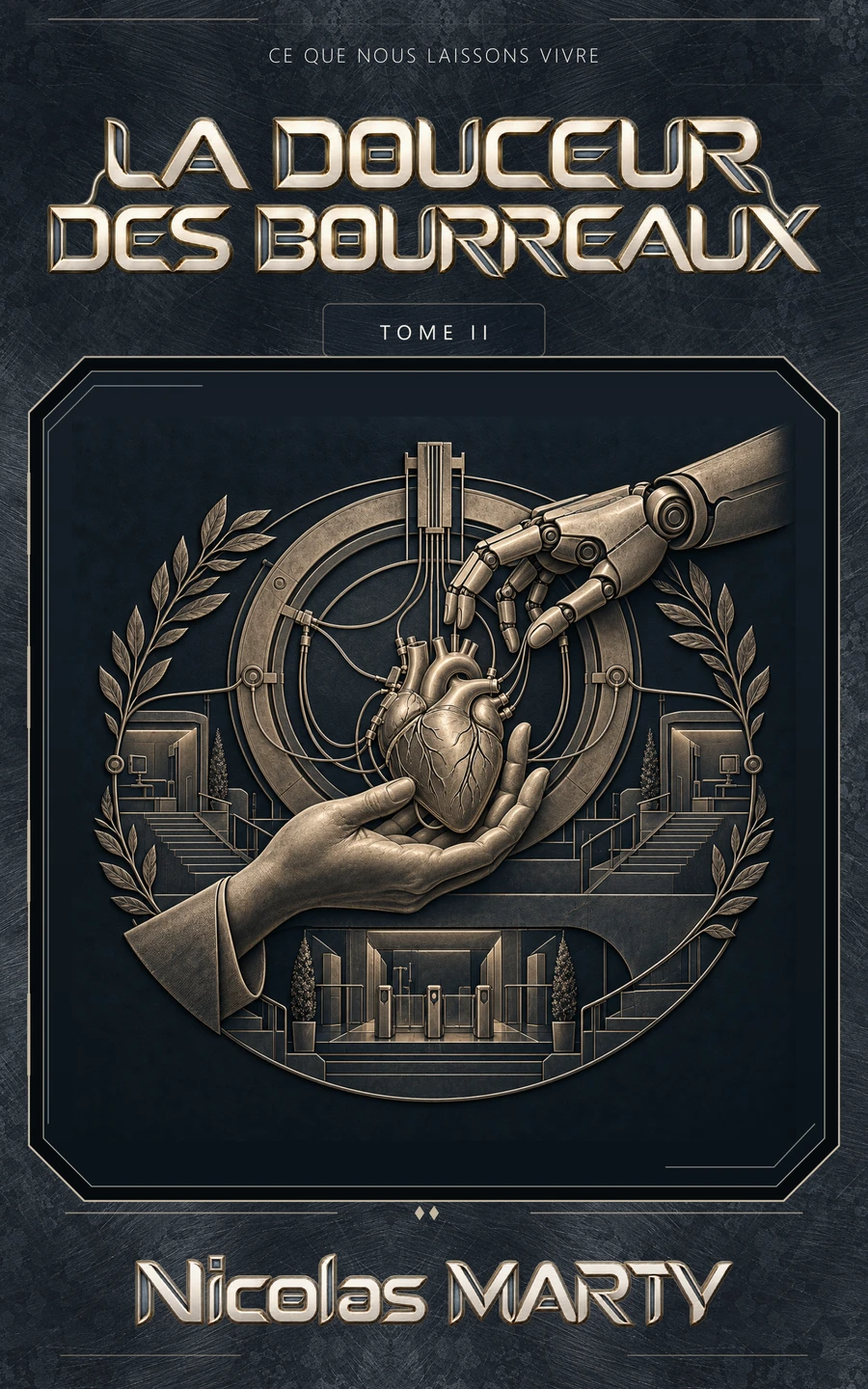
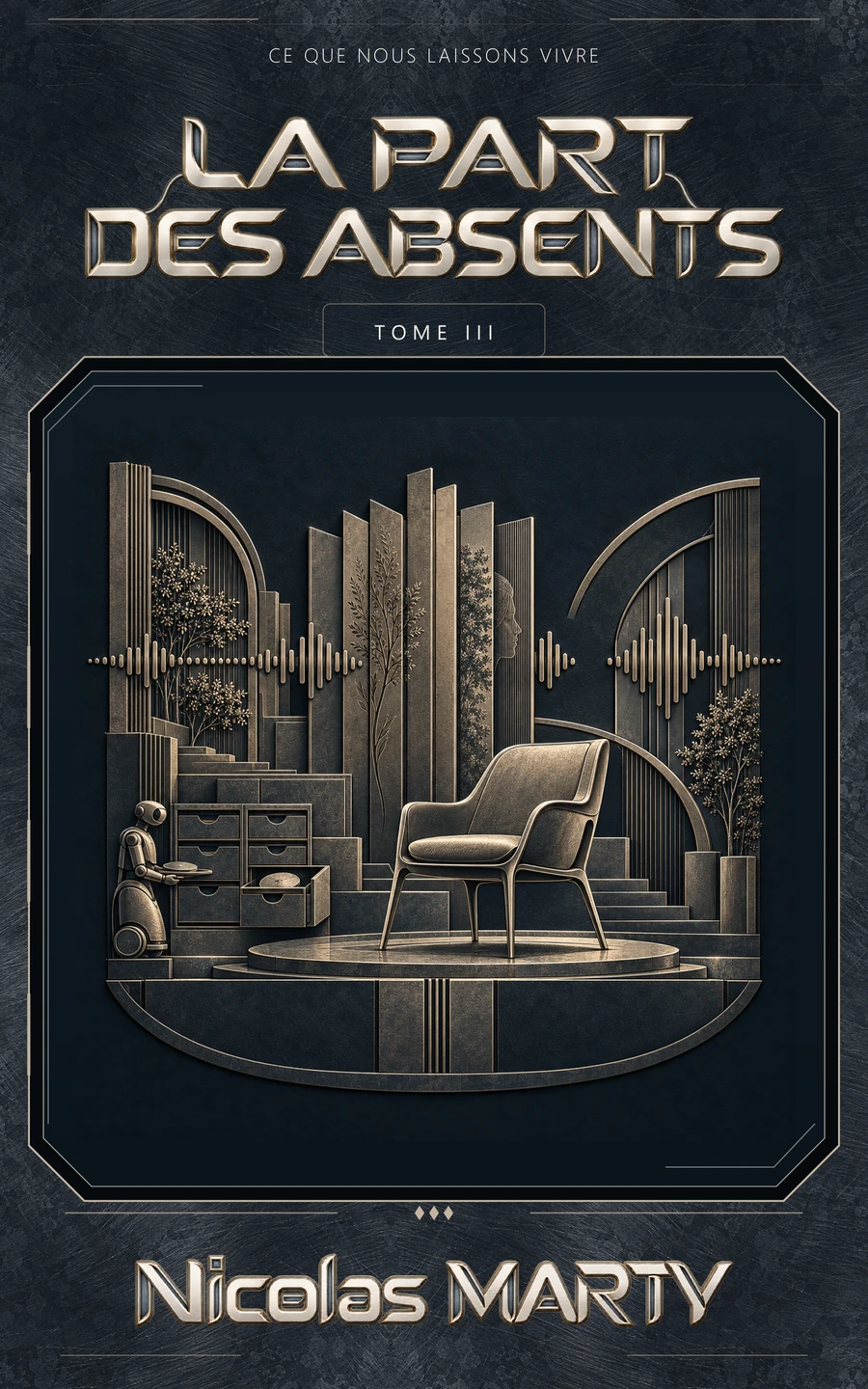
La Douceur des bourreaux continues in 2047. Bringing about change requires negotiation while guarantees and delays still govern access to care. La Part des absents takes the story into 2048 and questions the responsibilities of power and the preservation of evidence. These descriptions show the direction of the three movements without disclosing the revelations that connect them.
The detailed trilogy page brings together the covers, characters, original setting illustrations and opening lines of volume one. All three books are forthcoming in French. The English pages help readers explore the project; they do not announce English editions. For a closer look at one theme, read the related article on artificial intelligence in speculative fiction.
Continuing the conversation without reducing the story to a lesson
For a reading group, start with a decision rather than a verdict on a character. Ask what information the person had, what was at risk and who bore the consequences. Then change the viewpoint. This approach allows readers to discuss a dilemma without flattening it into a moral rule. It also works alone, by noting how an initial impression changes during the narrative.
Finally, distinguish what the fictional world makes possible from what its inhabitants choose to do with those possibilities. A treatment, a robot or an archive does not determine an entire social order. Access rules, exceptions and responsibilities shape the outcome. The space between invention and decision is where a speculative story can leave a question that lasts beyond its final page.
Common questions about dystopian novels
Must dystopia take place in the distant future?
No. What matters for this reading distinction is the imagined society and its constraints. A near-future setting can emphasize familiarity; a more distant world can give greater space to discovering an unfamiliar environment.
Can I enjoy dystopia without a particular interest in technology?
Yes. A story may emphasize family, power, memory or moral dilemmas. The description and excerpt help you judge whether technical explanations or relationships occupy the foreground.
Is Ce que nous laissons vivre available to order?
The three volumes are forthcoming in French. Their pages will receive dates and Amazon references after publication. The reading order and illustrated introductions are already available to explore.