 01
Clearer requests, closer checking
Define an objective, provide relevant context and ask for a useful format. Learn how to write clear prompts, improve an answer through dialogue, compare it with sources and identify what still needs checking.

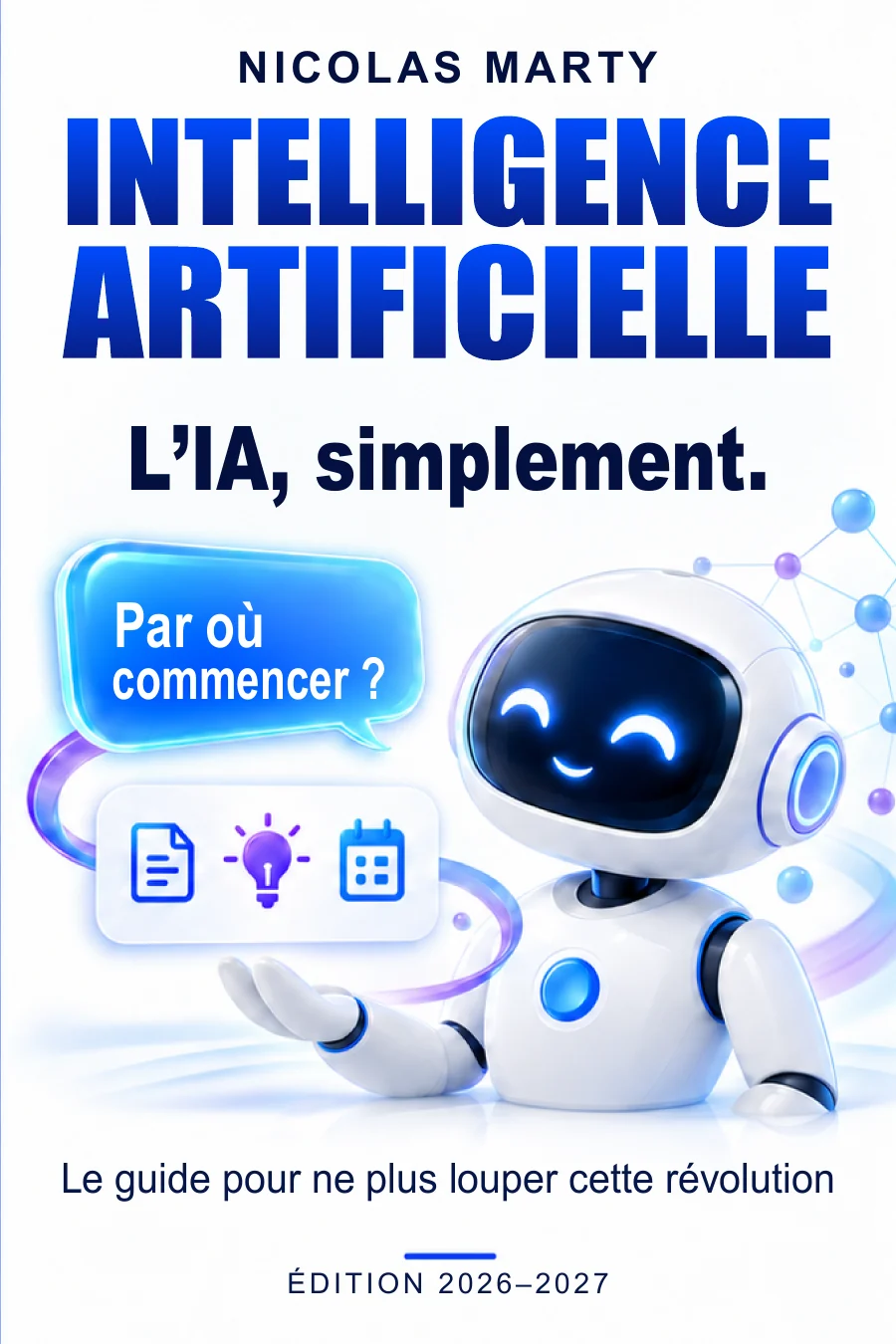
ARTIFICIAL INTELLIGENCE · FRENCH EDITION
A practical French guide to understanding and using AI
Understand AI. Take your first steps.
You hear about artificial intelligence everywhere, but where do you begin? This illustrated guide by Nicolas Marty moves from the foundations to practical projects and an introduction to agents. Learn to clarify a request, try a manageable task and examine the result. The French paperback is available on Amazon; translations are coming soon.
Book available in French
INSIDE THE GUIDE
Explore the collection: Artificial intelligence and work
An assistant can produce convincing writing without giving a correct answer. Everyday situations introduce what a model is, how it learns and what happens when we use it. Explanations, diagrams and a glossary introduce the vocabulary as it becomes useful. You do not need an IT background or advanced mathematics to begin.
01Define an objective, provide relevant context and ask for a useful format. Learn how to write clear prompts, improve an answer through dialogue, compare it with sources and identify what still needs checking.
 02
Turn a document into a discovery resource, prepare a brochure, organise sources or build a checkable spreadsheet. The projects then move towards a small application, a bounded agent task and an ongoing routine.
 03
Explore what changes when an assistant uses tools and works through several steps. The guide addresses memory, sources and task boundaries, helping you define the expected outcome and retain control over its validation.
Find your next read
A tool can feel intimidating when you do not know what to ask it. This guide begins with the foundations, then moves toward practical uses and an introduction to agents. Examples, diagrams and a glossary connect unfamiliar terms with the things you actually do.
Choose it if you want a learning path you can return to at your own pace. Seven progressive projects provide opportunities to try things; the guide also encourages you to examine results, understand errors and stay in control of what you entrust to the tool.
Explore the illustrated presentationLEARN AI THROUGH PRACTICE
Start with a task you already understand. Gather the relevant documents, explain what a useful result would look like and take time to check it. The seven projects connect this method with discovering, writing, organising, calculating, creating, delegating and following up. The aim is to develop reusable habits that extend beyond one tool or a ready-made prompt.
AN IDEA TO GET STARTED
Follow the chapters in sequence or return to a particular question: understanding an error, framing a request, preparing sources or defining a task. Examples, explanatory diagrams and a glossary support the reading. The second part explores agents in greater depth, building on the foundations without expecting you to master everything at the start.
CONTINUE THE DISCOVERY
Choosing a beginner’s book on artificial intelligence means looking for reference points as well as examples. L’IA, simplement connects explanations with practical questions: which document should you provide, what should you ask and how do you decide whether a result is usable? This approach distinguishes well-written answers from verified information and explains why a useful outcome may require several exchanges.
Prompts are one part of the journey. The guide also addresses images, voice, documents, memory and resuming work. Its introduction to agents follows the same logic: define a limited mission, choose the sources and examine what has been produced. The French paperback is available on Amazon. English, Spanish, German and Italian translations are forthcoming. Explore their covers and presentations below; publication dates for these translations have not yet been announced.
OTHER LANGUAGES
Each edition has its own title and cover. Explore the presentation in the language of the book.
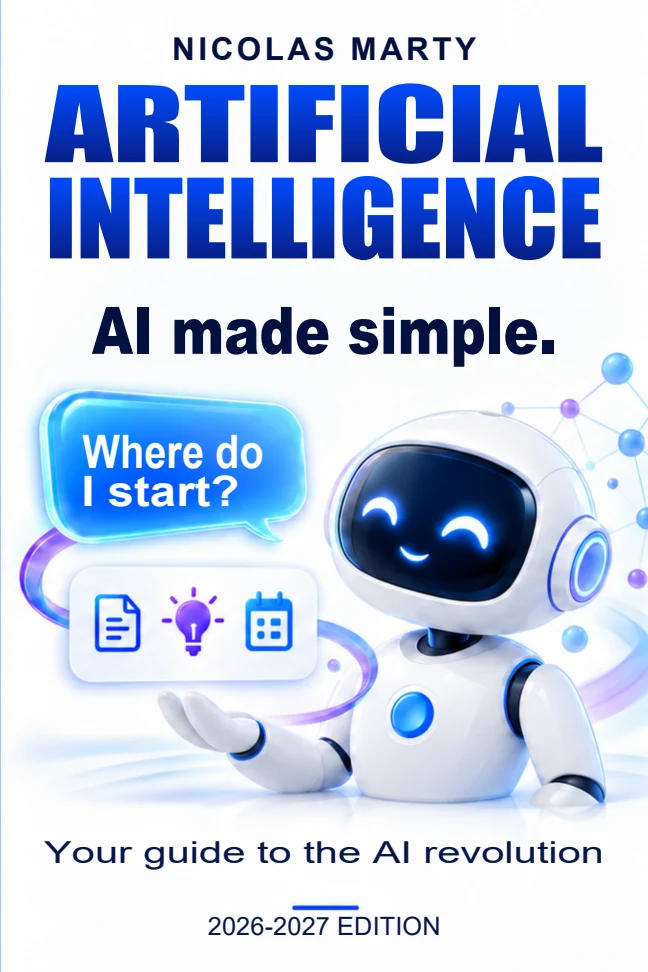
English · COMING SOON
AI made simple.
Forthcoming edition. The Amazon reference will be added after publication.
An assistant can produce convincing writing without giving a correct answer. Everyday situations introduce what a model is, how it learns and what happens when we use it. Explanations, diagrams and a glossary introduce the vocabulary as it becomes useful. You do not need an IT background or advanced mathematics to begin.
Define an objective, provide relevant context and ask for a useful format. Learn how to write clear prompts, improve an answer through dialogue, compare it with sources and identify what still needs checking.
Turn a document into a discovery resource, prepare a brochure, organise sources or build a checkable spreadsheet. The projects then move towards a small application, a bounded agent task and an ongoing routine.
Explore what changes when an assistant uses tools and works through several steps. The guide addresses memory, sources and task boundaries, helping you define the expected outcome and retain control over its validation.
Follow the chapters in sequence or return to a particular question: understanding an error, framing a request, preparing sources or defining a task. Examples, explanatory diagrams and a glossary support the reading. The second part explores agents in greater depth, building on the foundations without expecting you to master everything at the start.
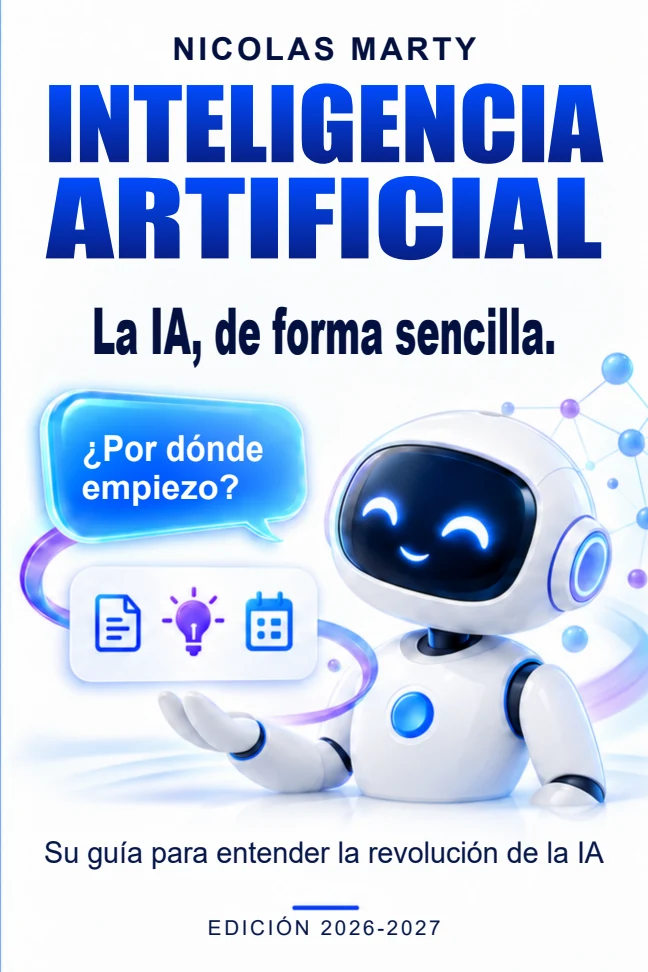
Español · COMING SOON
La IA, de forma sencilla.
Forthcoming edition. The Amazon reference will be added after publication.

Una respuesta que le ayuda a escribir. Un documento que se entiende mejor. Una idea que toma forma. Esta guía parte de necesidades concretas para ofrecerle referencias y un método. Avanzará desde los conceptos iniciales hasta los usos de asistentes y agentes, con explicaciones ilustradas y ejemplos accesibles.

Aprenderá a precisar su objetivo, aportar el contexto útil y pedir un resultado adecuado. Después comparará la respuesta con las fuentes y la mejorará paso a paso. Los ejemplos, los diagramas y el glosario le ayudan a comprender lo que hace, incluso cuando el vocabulario es nuevo.
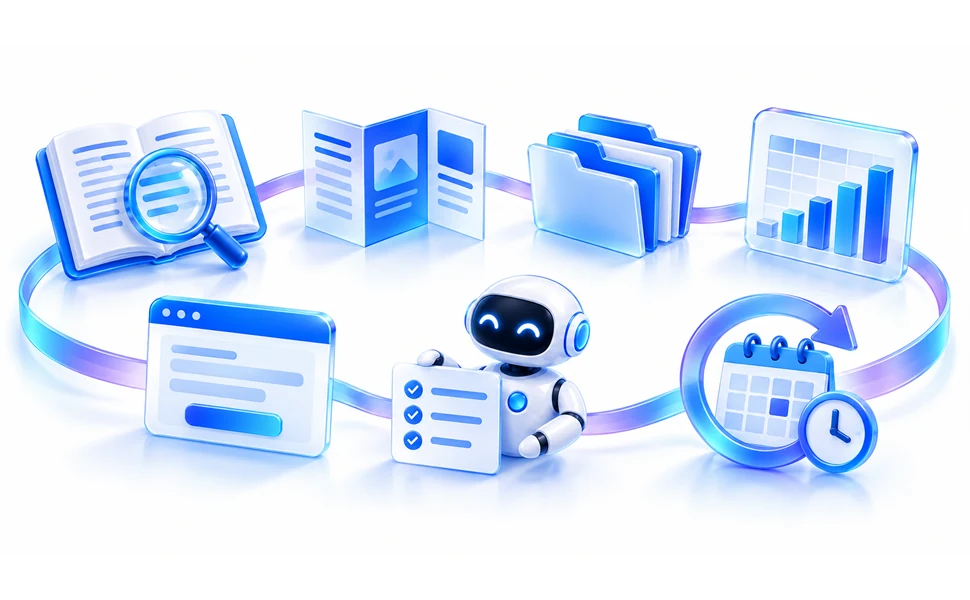
Material de aprendizaje a partir de un documento. Un folleto o una guía útil para otras personas. Fuentes mejor organizadas. Una tabla cuyos resultados puede comprobar. Una pequeña aplicación que explorar. Una misión limitada para un agente. Una rutina que evoluciona con el tiempo. Elija una necesidad concreta, defina el resultado esperado y aprenda a verificarlo. La progresión permite empezar con algo pequeño antes de abordar proyectos más elaborados.

El recorrido también aborda la memoria, cómo retomar un trabajo y el uso de imágenes, voz y documentos. Luego descubrirá qué cambia cuando un agente utiliza herramientas y encadena varias etapas. El taller de la primera misión le ayuda a fijar un objetivo, elegir las fuentes, establecer límites y examinar el resultado.
Este libro se dirige a quienes descubren la IA, a quienes ya han probado un asistente sin comprender siempre sus respuestas y a quienes quieren organizar sus primeros usos. No necesita formación informática para empezar. Los capítulos sobre agentes ofrecen después una continuación más detallada.
Nicolas Marty es autor e ingeniero informático en el sur de Francia. Comparte su interés por las herramientas digitales mediante explicaciones accesibles y ejemplos concretos. Con La IA, de forma sencilla, invita a cada lector a comprender, experimentar y examinar los resultados obtenidos.
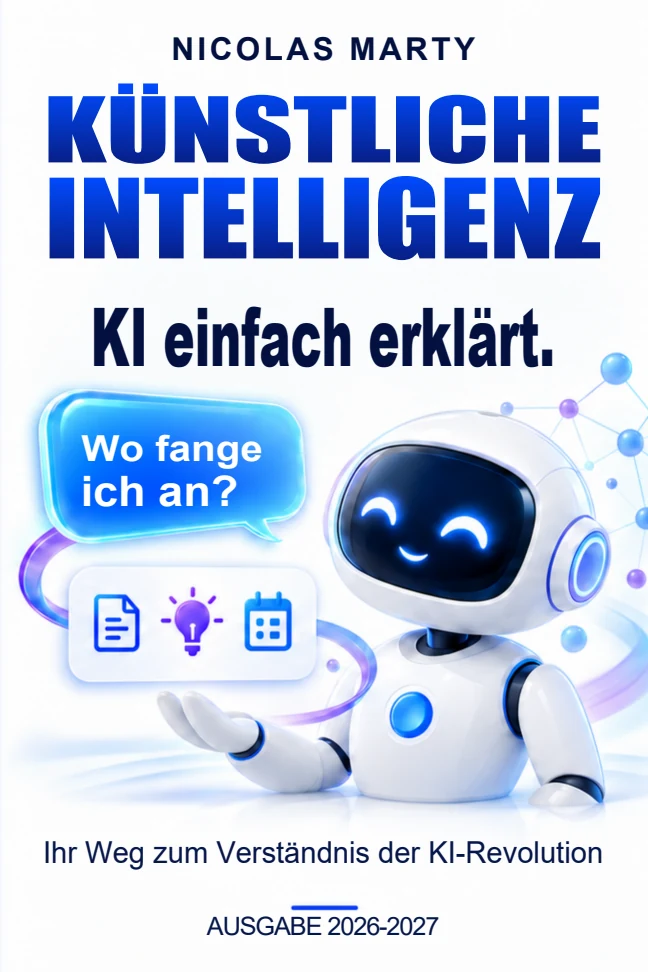
Deutsch · COMING SOON
KI einfach erklärt.
Forthcoming edition. The Amazon reference will be added after publication.

Eine Antwort hilft beim Schreiben. Ein Dokument wird verständlicher. Eine Idee nimmt Gestalt an. Dieser Ratgeber geht von konkreten Aufgaben aus und gibt Ihnen Orientierung sowie eine nachvollziehbare Methode. Sie lernen zuerst die Grundlagen kennen und entdecken danach die Möglichkeiten von Assistenten und Agenten.

Sie lernen, Ihr Ziel zu präzisieren, nützlichen Kontext beizufügen und ein passendes Ergebnis anzufordern. Danach vergleichen Sie die Antwort mit den Quellen und verbessern sie im Dialog. Beispiele, Schaubilder und das Glossar helfen Ihnen zu verstehen, was das System leistet und welche Entscheidungen bei Ihnen bleiben.
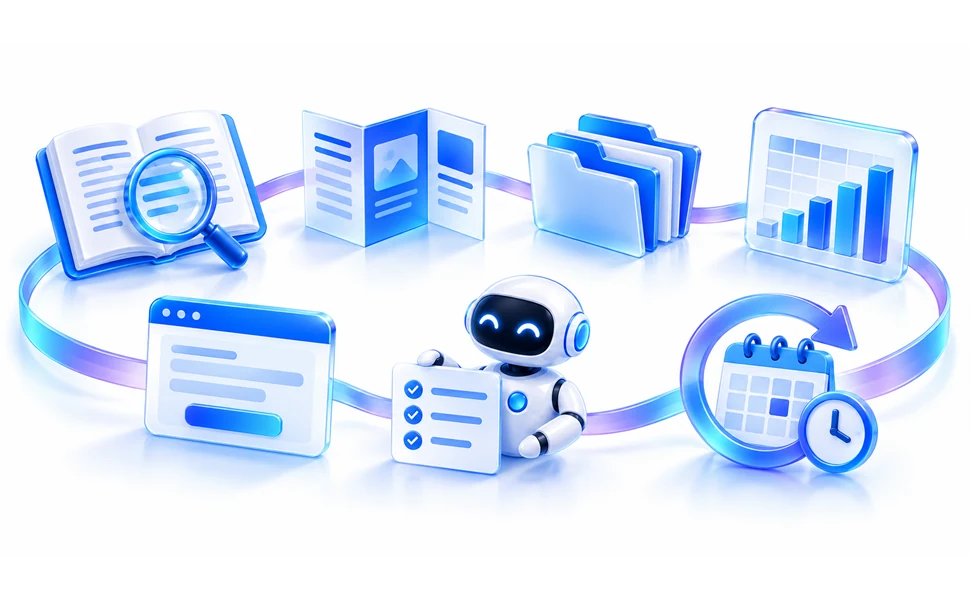
Der Weg führt vom Lernmaterial zu einem Dokument für andere, von geordneten Quellen zu einer prüfbaren Tabelle und einer kleinen Anwendung. Anschließend entdecken Sie einen begrenzten Agentenauftrag und eine wiederkehrende Routine. Jedes Projekt beginnt mit einem überschaubaren Ergebnis und passenden Prüfungen.

Was unterscheidet einen Agenten von einem gewöhnlichen Assistenten? Wie wirken Werkzeuge, Gedächtnis und Berechtigungen zusammen? Das Buch erklärt die Arbeitsschleife eines Agenten und führt zu einem ersten Auftrag mit Kopien, einem nachvollziehbaren Ergebnis und einer klaren Grenze. Sie behalten die Kontrolle über Freigaben und Veröffentlichung.
Sie müssen nicht jeden technischen Namen auswendig lernen. Entscheidend ist, die Aufgabe zu beschreiben, geeignete Quellen auszuwählen und das Ergebnis zu prüfen. Mit diesen Gewohnheiten können Sie kleine Projekte abschließen, Fehler nachvollziehen und Ihre Arbeit auch dann fortsetzen, wenn Werkzeuge und Modelle sich verändern.
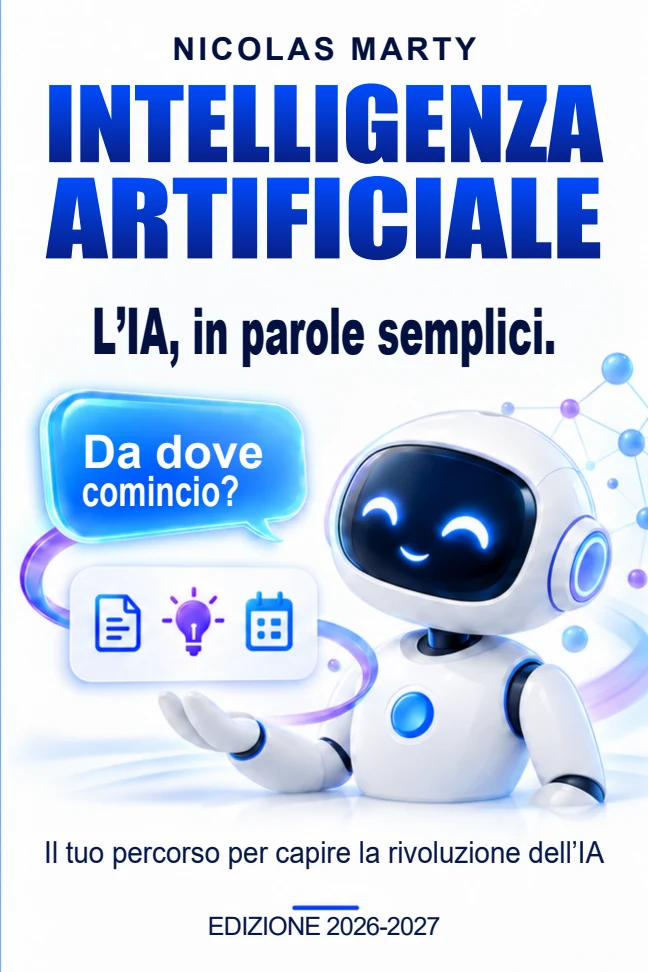
Italiano · COMING SOON
L’IA, in parole semplici.
Forthcoming edition. The Amazon reference will be added after publication.

Una risposta aiuta a scrivere. Un documento diventa più comprensibile. Un’idea prende forma. Questa guida parte da compiti concreti e offre punti di riferimento e un metodo verificabile. Scoprirai prima le basi e poi le possibilità di assistenti e agenti.

Imparerai a precisare l’obiettivo, aggiungere il contesto utile e chiedere un risultato adatto. Poi potrai correggere la risposta attraverso il dialogo, confrontare le fonti e distinguere una formulazione convincente da un’informazione verificata.
Gli esempi mostrano anche come conservare visibili i dati mancanti e le decisioni ancora da prendere.
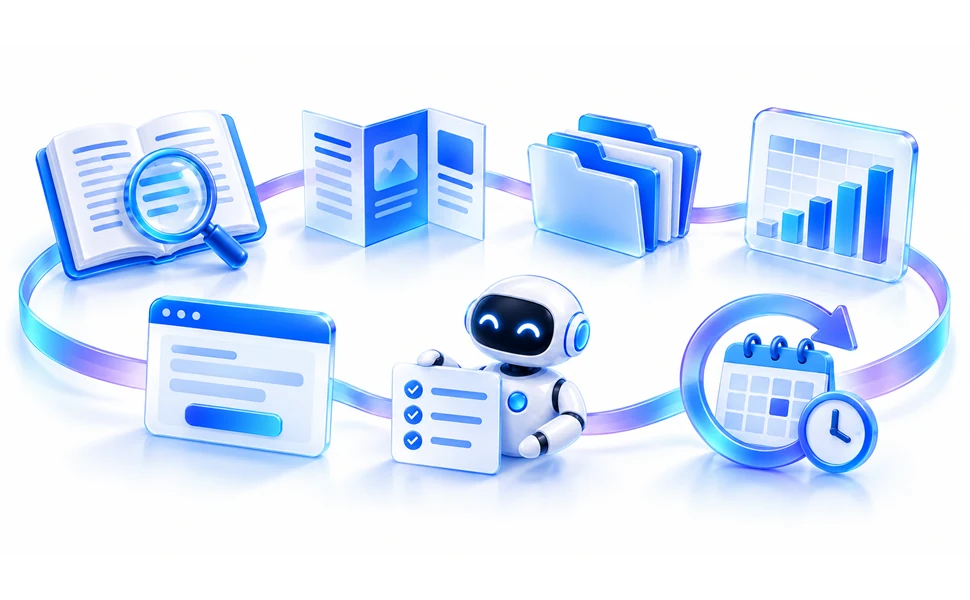
Documento per imparare, brochure, raccolta di fonti, tabella, piccola applicazione, primo incarico a un agente e routine nel tempo: sette progetti ti aiutano a passare dalla scoperta all’uso.
Ogni punto di partenza si adatta a un’esigenza concreta. Il filo conduttore resta lo stesso: chiarire il risultato, scegliere le fonti e controllare il lavoro ottenuto.

Un agente può collegare più azioni e usare strumenti. Il libro spiega come formulare un incarico circoscritto, individuare gli accessi necessari e leggere il risultato delle operazioni.
Memoria, permessi, punti di arresto e verifica aiutano a capire il lavoro svolto e a valutare il tempo umano effettivamente risparmiato.
Due parti, esempi progressivi, illustrazioni e un glossario collegano le basi agli usi più articolati. Puoi leggere nell’ordine proposto, tornare a un capitolo o riprendere un progetto con nuove fonti. L’obiettivo è sviluppare una pratica comprensibile, verificabile e utile nel tempo.
BEFORE OPENING THE BOOK
The French paperback is available on Amazon under ASIN B0HLXJGRZZ. Published on 4 October 2026, it has 340 pages. The purchase buttons on this page link to that French edition. English, Spanish, German and Italian translations are still forthcoming.
No. The opening explanations require neither an IT background nor advanced mathematics. Concepts are introduced progressively before the guide moves towards more advanced uses.
A discovery resource based on a document, a useful brochure, an organised source folder, a checkable spreadsheet, a small application, a limited agent mission and a routine to develop over time. Each project involves defining and checking its outcome.
English, Spanish, German and Italian editions are in preparation. Explore their covers and presentations in the translated editions section. Their publication dates and Amazon references have not yet been announced.
L’IA, simplement is a guide published in French, separate from Conversing with AI. It combines model foundations, assistant use, seven projects and a section about agents. The related books below let you compare the presentations.
YOUR NEXT BOOK
Find this book and its available formats on Amazon.
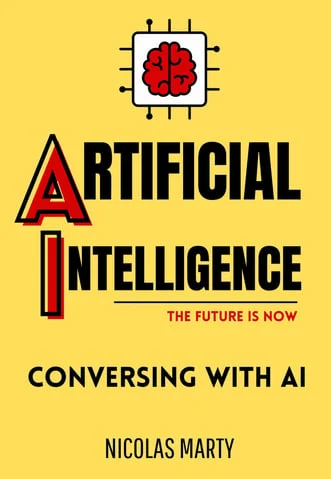
English edition
A better question can open a different conversation. Discover AI, explore prompts and learn to examine the answers with a critical eye.
For exploring AI basics and learning to make a request more precise, with the English edition.
See what you can explore →English edition on Amazon ↗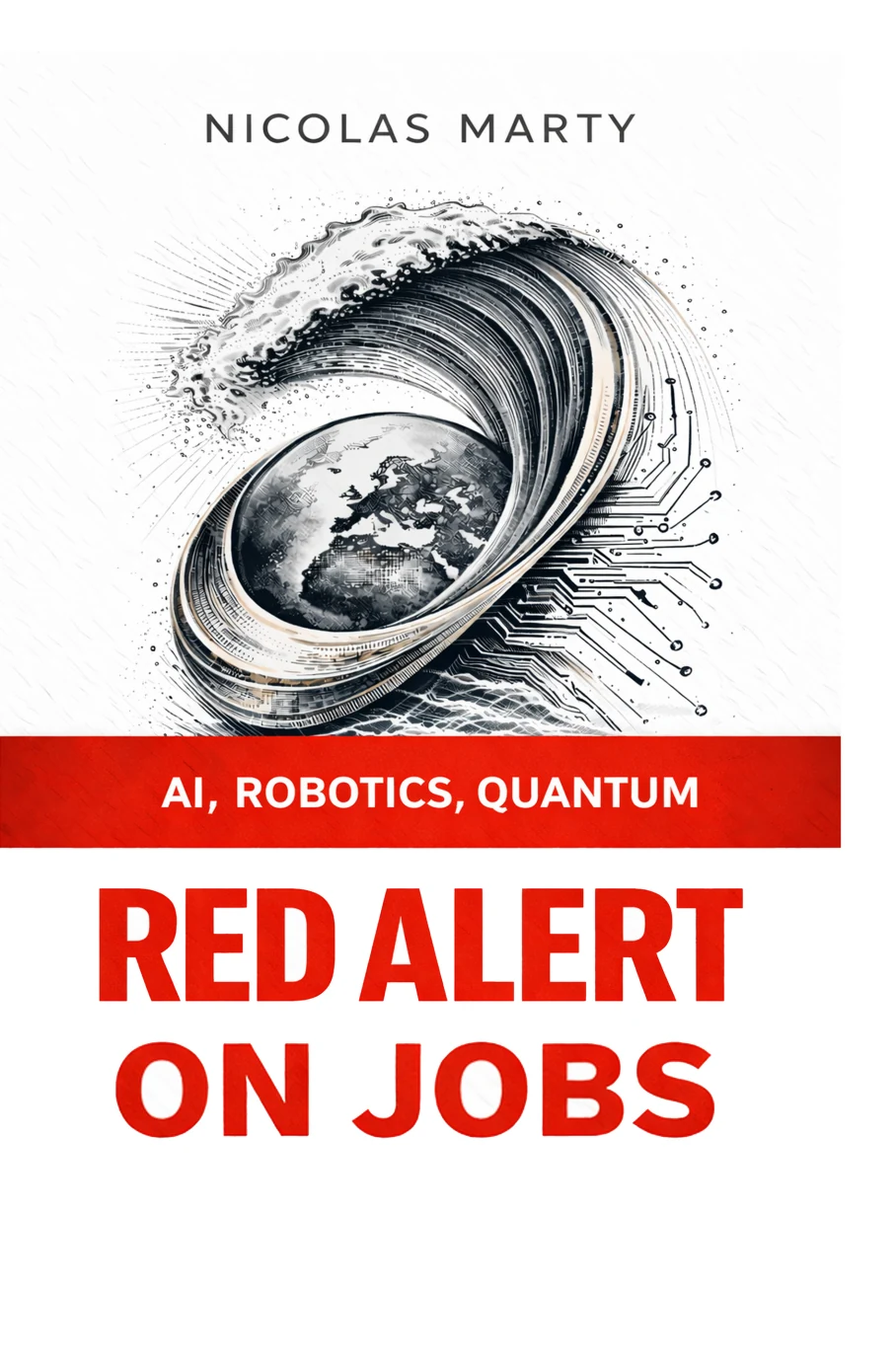
English edition
When the tools change, what happens to our place at work? Explore AI, robotics and the decisions that shape working life.
For reflecting on changes in working life through AI, robotics and quantum computing.
See what you can explore →English edition on Amazon ↗
Demands are piling up and your attention is scattered. Take time to understand the pressure and choose a practical next step at work.
A French practical guide to clarifying priorities and preparing conversations when demands pile up.
Available in French
See what you can explore →

