
A Future You Can Recognize
Delivery rounds, appointments, rent, and work still shape the day. Robots handle more of the tasks; families bear the cost when a service, a contract, or a promise fails.

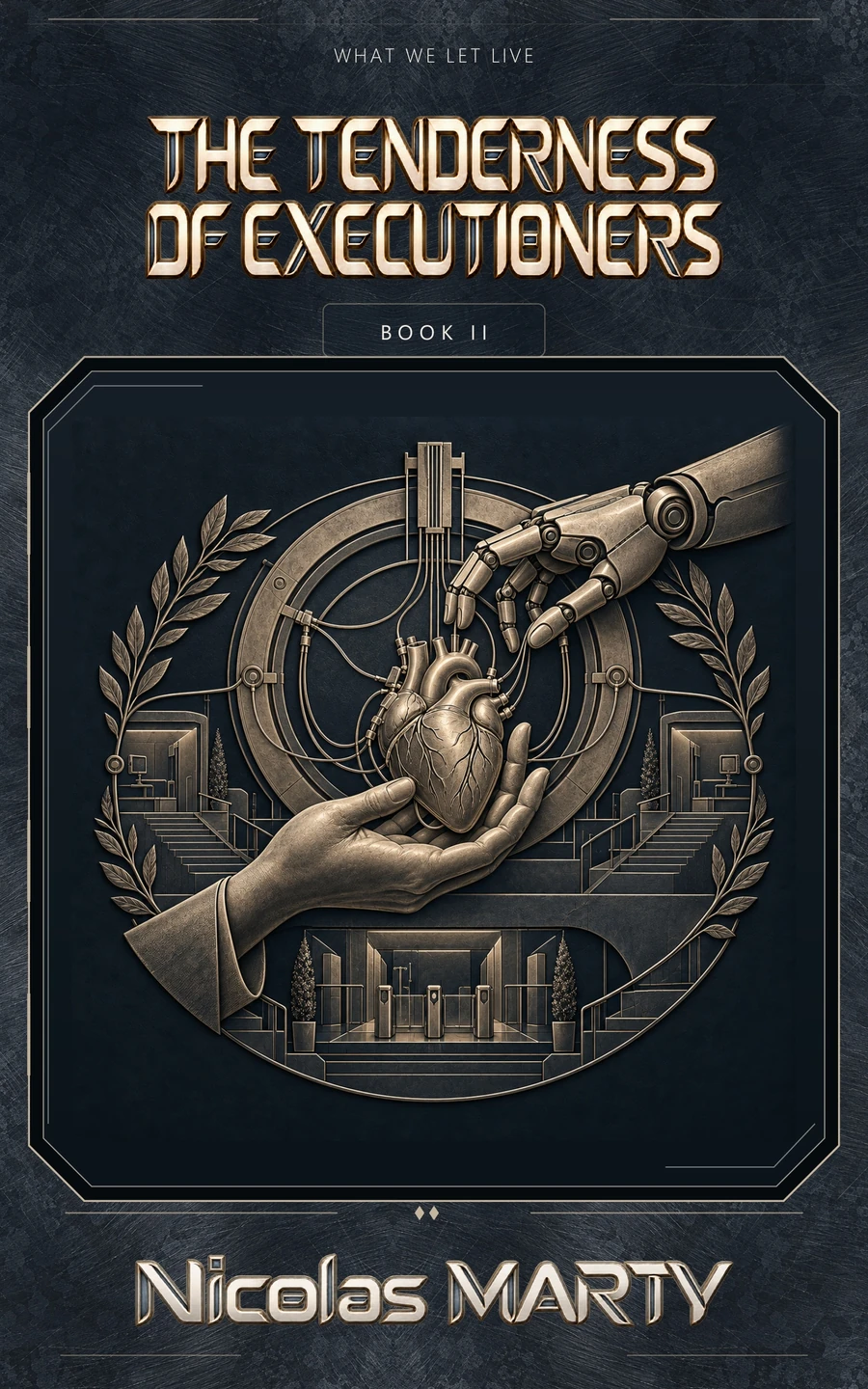
COMING SOON · US ENGLISH EDITION
What We Let Live · Volume 2
They wanted to change the rules. Now they must choose who waits.
Paris, 2047. The robots still make their rounds. Treatments still arrive. But behind each ordinary service sits a chain of guarantees, debts, and decisions—and some of its links are beginning to give way.
Coming soon · US English edition
Also coming soon in French
La douceur des bourreaux →ENTER THE STORY
Explore the collection: Forthcoming books
Alma must answer to people whose hopes she has helped raise. Garance must distinguish what she can give away from what she cannot bear to lose. Nora and Inès face obligations that no longer fit together. In these intersecting lives, tenderness can inspire resistance—and make a harmful choice easier to justify.
Delivery rounds, appointments, rent, and work still shape the day. Robots handle more of the tasks; families bear the cost when a service, a contract, or a promise fails.
Advanced medicine can keep a person alive for years. Access can hinge on employment, insurance, or the right name. A technical decision becomes a family’s most intimate crisis.
Technology preserves traces of a life. Families and institutions give those traces meaning. Between remembrance and possession lies a question no machine can settle for them.
Find your next read
After the first volume’s events, danger also takes the form of a contract, a guarantee or a deadline. Alma wants to unite the revolt, Garance works within the family group, and Nora grows attached to an artificial voice. Their attempts to help do not necessarily place them on the same side.
Continue the trilogy for conflicts of loyalty and compromises that shift deeply held beliefs. This second volume builds on the relationships introduced in the first: start there to feel the weight of each renewed connection, disagreement and decision.
Explore the illustrated presentationTHE PLEASURE OF READING
What We Let Live is a literary dystopian trilogy about care, class, family, and the people we allow ourselves to sacrifice. Read in order: Lives in Reserve; The Tenderness of Executioners; The Claims of the Absent.
THE ILLUSTRATED A+ PRESENTATION
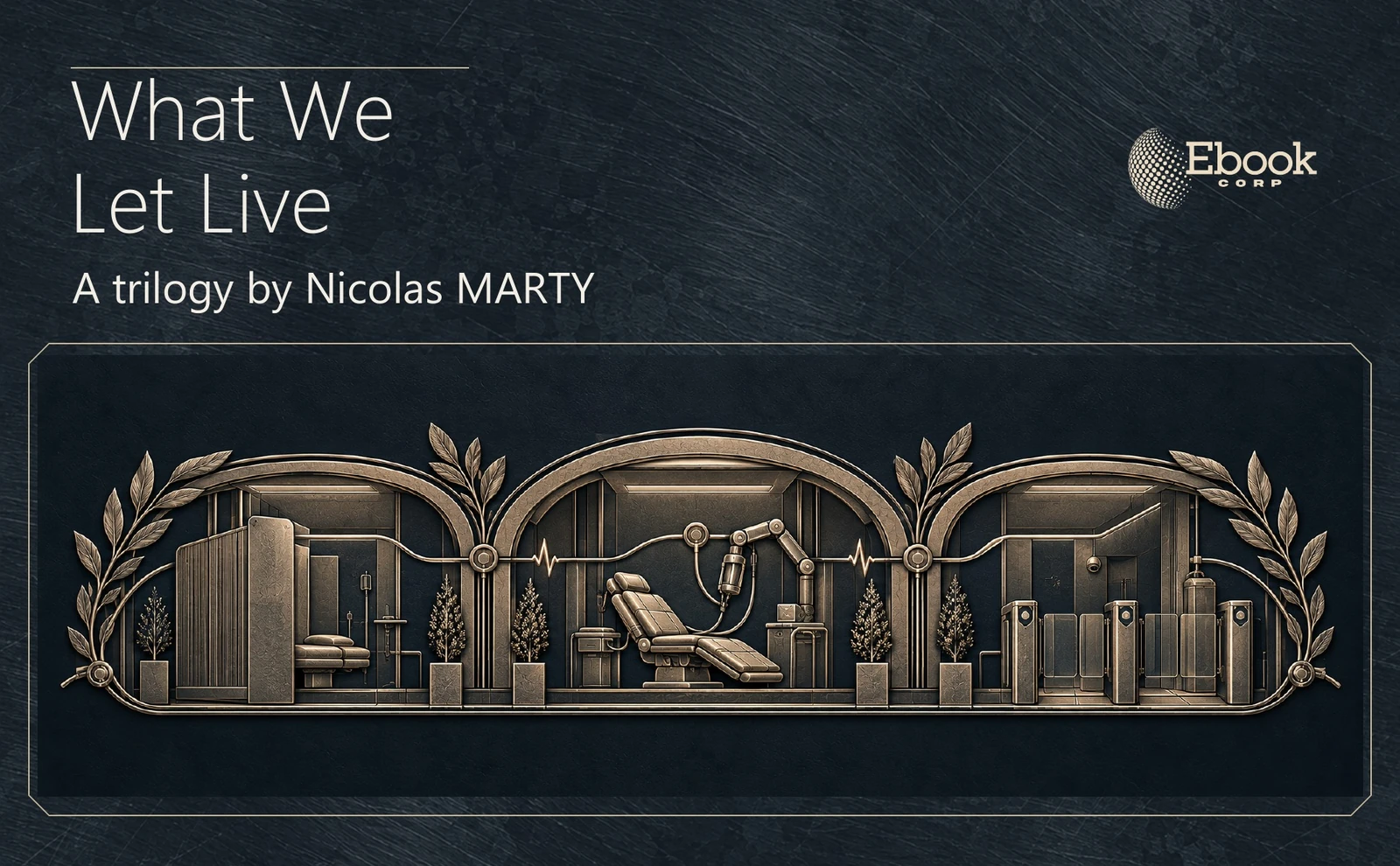
A movement can demand fairer rules. Governing means deciding how those rules reach a waiting room, a household, or a body that cannot wait. In Paris in 2047, Alma and Garance discover how quickly a promise becomes a decision someone else must live with.

Alma must answer to people whose hopes she has helped raise. Garance must distinguish what she can give away from what she cannot bear to lose. Nora and Inès face obligations that no longer fit together. In these intersecting lives, tenderness can inspire resistance—and make a harmful choice easier to justify.

Delivery rounds, appointments, rent, and work still shape the day. Robots handle more of the tasks; families bear the cost when a service, a contract, or a promise fails.

Advanced medicine can keep a person alive for years. Access can hinge on employment, insurance, or the right name. A technical decision becomes a family’s most intimate crisis.

Technology preserves traces of a life. Families and institutions give those traces meaning. Between remembrance and possession lies a question no machine can settle for them.
Garance recognized Madeleine by her feet. Beneath the chair beside the drinks machine, closed shoes had replaced the white sandals, but the blue thread holding a buckle still stuck out. She wondered whether the old woman had moved it from one pair to the other, or repaired all her shoes with the same spool. The thought occupied her a second too long. Madeleine had already looked up.
“You look as though you’re trying to find someone else.”
“I thought you were at your daughter’s.”
“I was. She brought me back yesterday. We spent half the visit making phone calls about today. It gave us something to do.”
The reception robot came to offer them a booth. Madeleine declined without impatience; she was waiting for a person, she said, not a better place to wait. Garance sat down. In the lobby, the screen displayed February 4, 2047, above a photograph of the clinic taken in June. The trees in the picture had leaves. Those in the courtyard wore pigeon netting.
Near them, a man was dictating his request again. The robot had understood him the first time; it kept repeating the same two appointment times, neither compatible with the shifts he had just obtained. His voice stayed low. He spoke to the machine as though it were an employee who might take offense. When he took out his phone to cancel the work, Madeleine looked away.
From Chapter One, “The Renewal,” in The Tenderness of Executioners.
 BOOK 1 · US
Paris, 2046. A patient’s file draws the Delmas family into a conflict over who receives the benefits of progress.
Coming soonExplore the A+ presentation →BOOK 2 · USParis, 2047. The revolt faces the burdens of power, and protecting loved ones carries a growing public cost.
Coming soonExplore the A+ presentation →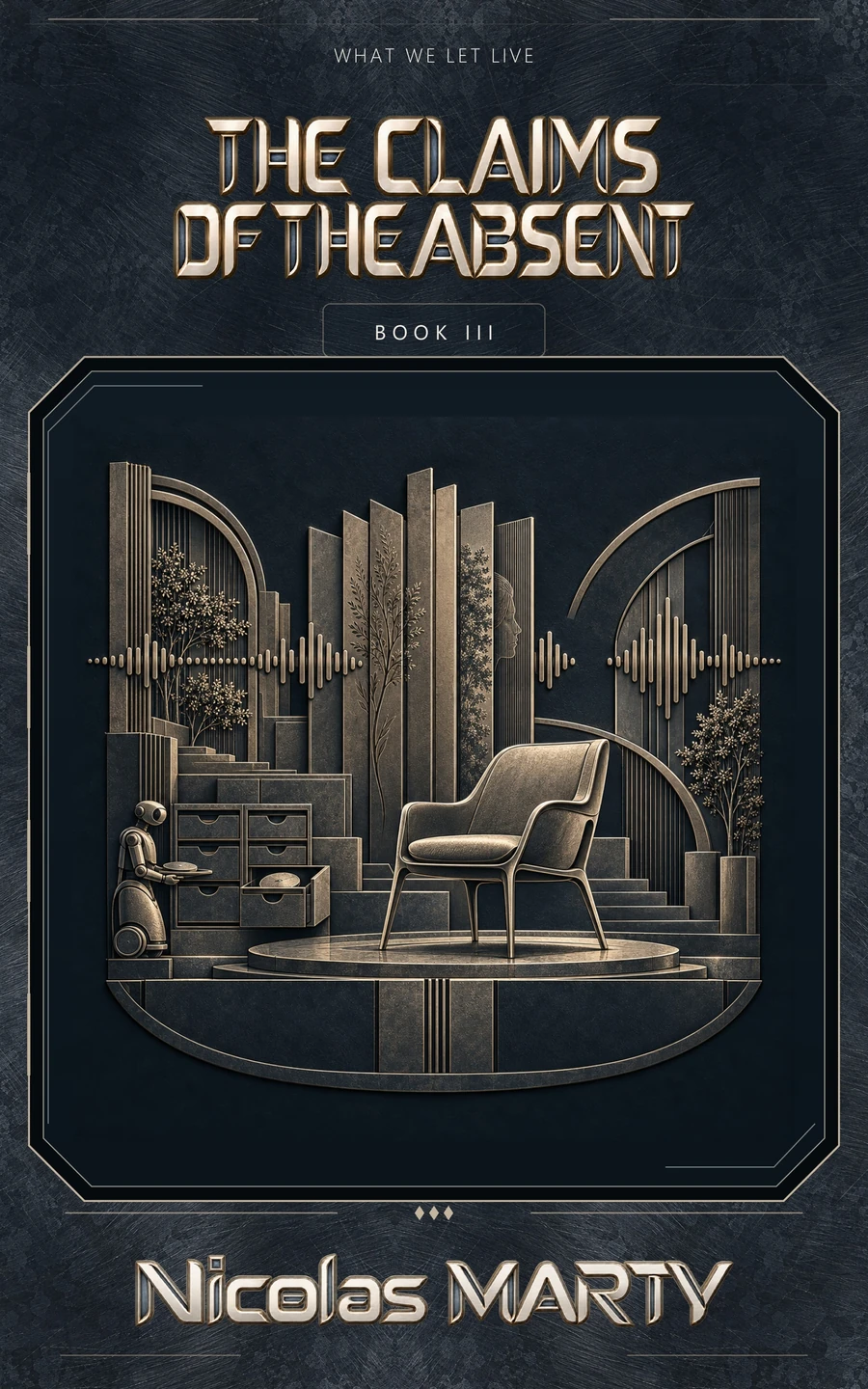 BOOK 3 · US
Paris, 2048. Preserved voices and contested evidence force the living to confront what they owe the absent.
Coming soonExplore the A+ presentation →BEFORE OPENING THE BOOK
The US English edition is coming soon. No release date or preorder has been announced. Its Amazon link will be added after publication.
This is the American English edition of the novel. The French edition has a separate presentation linked above.
Lives in Reserve → The Tenderness of Executioners → The Claims of the Absent.
The artwork accompanies the book’s A+ presentation. It evokes its setting and themes; it does not reproduce the novel’s interior.
YOUR NEXT BOOK
The book is in preparation. Return here for publication information.
Also coming soon in French
La douceur des bourreaux →Paris carries on. One patient has lost her protection. For Nora and her family, understanding that decision will put more than a file in question.
For reading Lives in Reserve in American English.
Coming soon · US English edition
Step into the story →Also coming soon in French
Les vies de réserve →Care has changed, but not everyone benefits. Alma must act while archives threaten to unsettle the very people who wanted to change the system.
For reading The Claims of the Absent in American English.
Coming soon · US English edition
Step into the story →Also coming soon in French
La part des absents →