
A Future You Can Recognize
Delivery rounds, appointments, rent, and work still shape the day. Robots handle more of the tasks; families bear the cost when a service, a contract, or a promise fails.

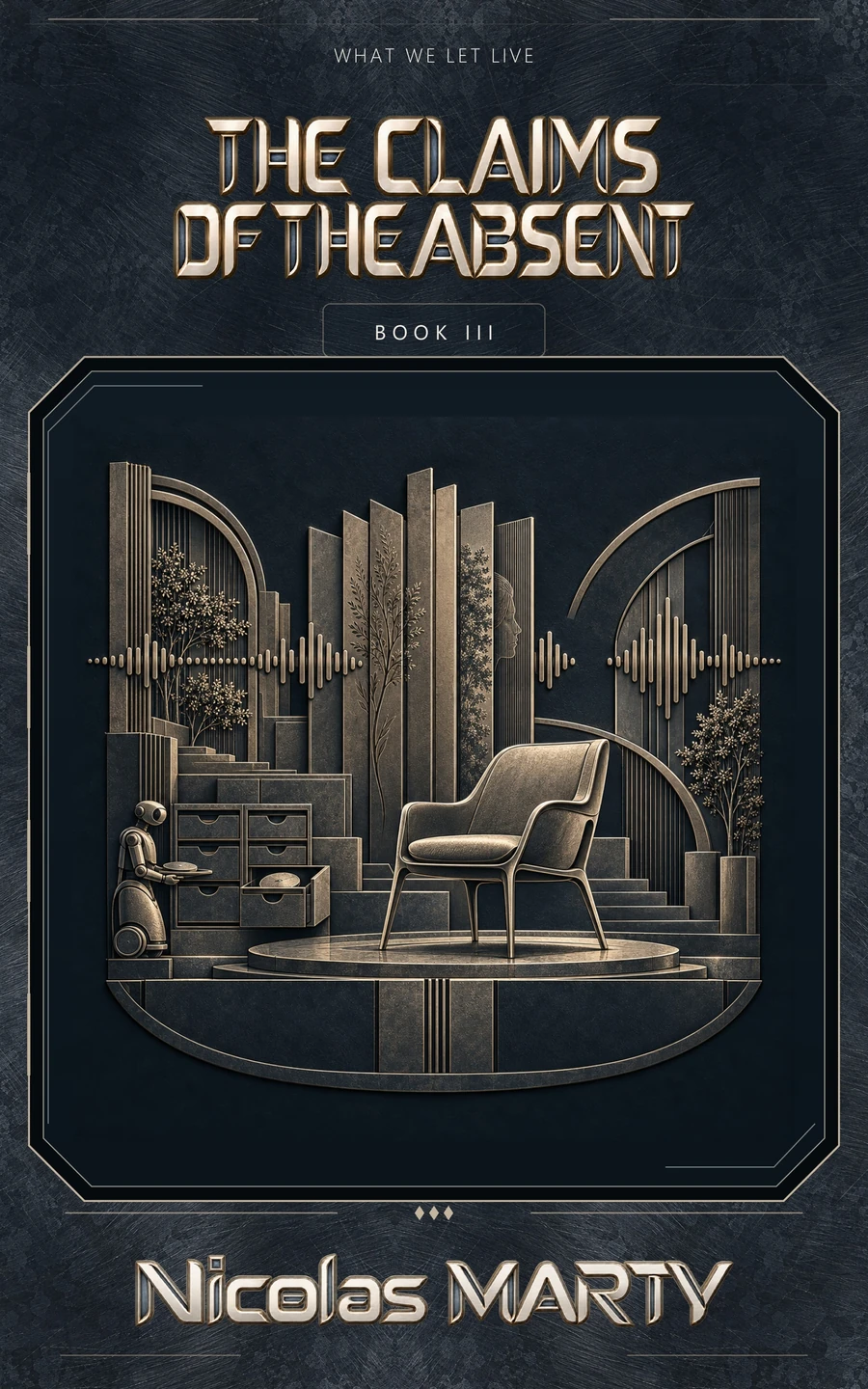
COMING SOON · US ENGLISH EDITION
What We Let Live · Volume 3
The past still has a voice. Who has the right to make it speak?
Paris, 2048. Robots make their rounds, families wait for appointments, and a citizens’ movement must decide whether its promises can survive the rules it has made. The city goes on. So do the consequences of what was done in its name.
Coming soon · US English edition
Also coming soon in French
La part des absents →ENTER THE STORY
Explore the collection: Forthcoming books
The consequences of earlier choices reach the institutions built to repair them. Alma confronts the distance between reform and its daily practice. Garance must reckon with privilege at its most personal. Inès carries records that implicate as well as reveal. Their final choices turn on responsibility to people who cannot answer back.
Delivery rounds, appointments, rent, and work still shape the day. Robots handle more of the tasks; families bear the cost when a service, a contract, or a promise fails.
Advanced medicine can keep a person alive for years. Access can hinge on employment, insurance, or the right name. A technical decision becomes a family’s most intimate crisis.
Technology preserves traces of a life. Families and institutions give those traces meaning. Between remembrance and possession lies a question no machine can settle for them.
Find your next read
Leading a new network does not make the waiting disappear. In 2048, Alma carries different responsibilities, Garance negotiates the future of treatment, and Inès keeps evidence whose consequences reach beyond the opposing side. Memory becomes a practical question: whose voices will still be heard?
This final volume is for readers who want to follow the consequences of victory as closely as the reasons for revolt. Return after the first two books to follow a story of care, power and family ties through to its conclusion.
Explore the illustrated presentationTHE PLEASURE OF READING
What We Let Live is a literary dystopian trilogy about care, class, family, and the people we allow ourselves to sacrifice. Read in order: Lives in Reserve; The Tenderness of Executioners; The Claims of the Absent.
THE ILLUSTRATED A+ PRESENTATION
A preserved voice can comfort, persuade, or be made to authorize. As evidence surfaces and loyalties harden, Alma, Garance, and Inès must face what the past has left in their hands—and what it has never given them the right to claim.

The consequences of earlier choices reach the institutions built to repair them. Alma confronts the distance between reform and its daily practice. Garance must reckon with privilege at its most personal. Inès carries records that implicate as well as reveal. Their final choices turn on responsibility to people who cannot answer back.

Delivery rounds, appointments, rent, and work still shape the day. Robots handle more of the tasks; families bear the cost when a service, a contract, or a promise fails.

Advanced medicine can keep a person alive for years. Access can hinge on employment, insurance, or the right name. A technical decision becomes a family’s most intimate crisis.

Technology preserves traces of a life. Families and institutions give those traces meaning. Between remembrance and possession lies a question no machine can settle for them.
The woman had brought last year’s form. She unfolded it carefully, as though the refusal it contained might spill onto the table.
Alma recognized the letterhead she had chosen. At the time, she had had the word beneficiary removed, preferring service user. She remembered spending twenty minutes on that correction and going home with the feeling that she was beginning something.
“This one is no longer valid,” she said.
“That’s what they told me. I have another.”
The woman took out a second sheet, then a third. Her name was Marianne Aubert. Her husband had lost his job picking orders when the warehouse installed arms capable of handling soft fabrics. He had found night shifts monitoring empty homes; she still did alterations, the ones for which customers insisted on speaking to a person. Between them, they earned less than before. Marianne’s mother had lived with them since her residential home closed.
They were asking for help with transfers in the morning. The robot was available. The installation slot was not.
From Chapter One, “An Interim Decision,” in The Claims of the Absent.
 BOOK 1 · US
Paris, 2046. A patient’s file draws the Delmas family into a conflict over who receives the benefits of progress.
Coming soonExplore the A+ presentation → BOOK 2 · US
Paris, 2047. The revolt faces the burdens of power, and protecting loved ones carries a growing public cost.
Coming soonExplore the A+ presentation →BOOK 3 · USParis, 2048. Preserved voices and contested evidence force the living to confront what they owe the absent.
Coming soonExplore the A+ presentation →BEFORE OPENING THE BOOK
The US English edition is coming soon. No release date or preorder has been announced. Its Amazon link will be added after publication.
This is the American English edition of the novel. The French edition has a separate presentation linked above.
Lives in Reserve → The Tenderness of Executioners → The Claims of the Absent.
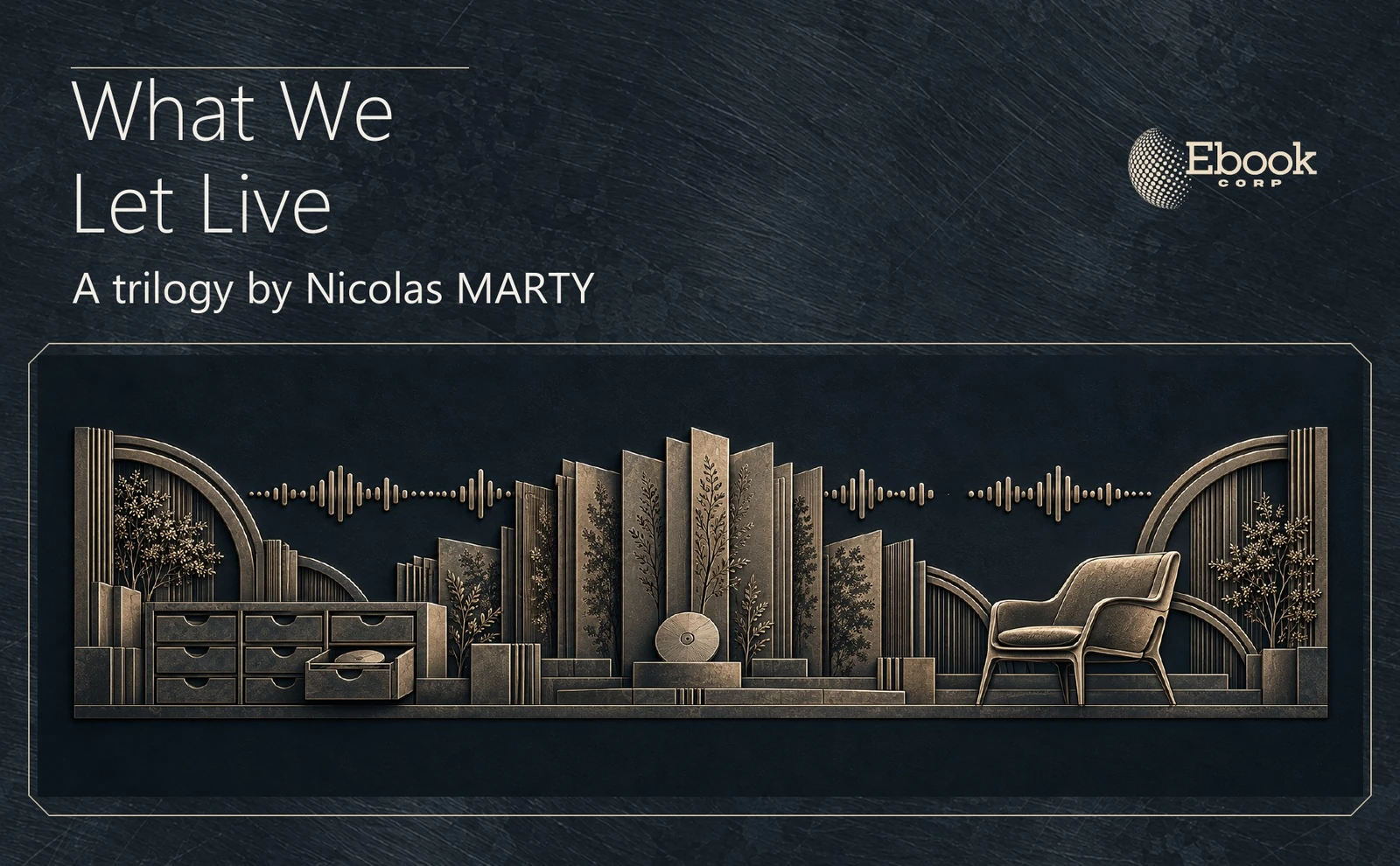
The artwork accompanies the book’s A+ presentation. It evokes its setting and themes; it does not reproduce the novel’s interior.
YOUR NEXT BOOK
The book is in preparation. Return here for publication information.
Also coming soon in French
La part des absents →Paris carries on. One patient has lost her protection. For Nora and her family, understanding that decision will put more than a file in question.
For reading Lives in Reserve in American English.
Coming soon · US English edition
Step into the story →Also coming soon in French
Les vies de réserve →A reprieve does not guarantee a protected life. In 2047, Nora’s family discovers what a promise can cost when care comes with conditions.
For reading The Tenderness of Executioners in American English.
Coming soon · US English edition
Step into the story →Also coming soon in French
La douceur des bourreaux →