
A Future You Can Recognize
Delivery rounds, appointments, rent, and work still shape the day. Robots handle more of the tasks; families bear the cost when a service, a contract, or a promise fails.

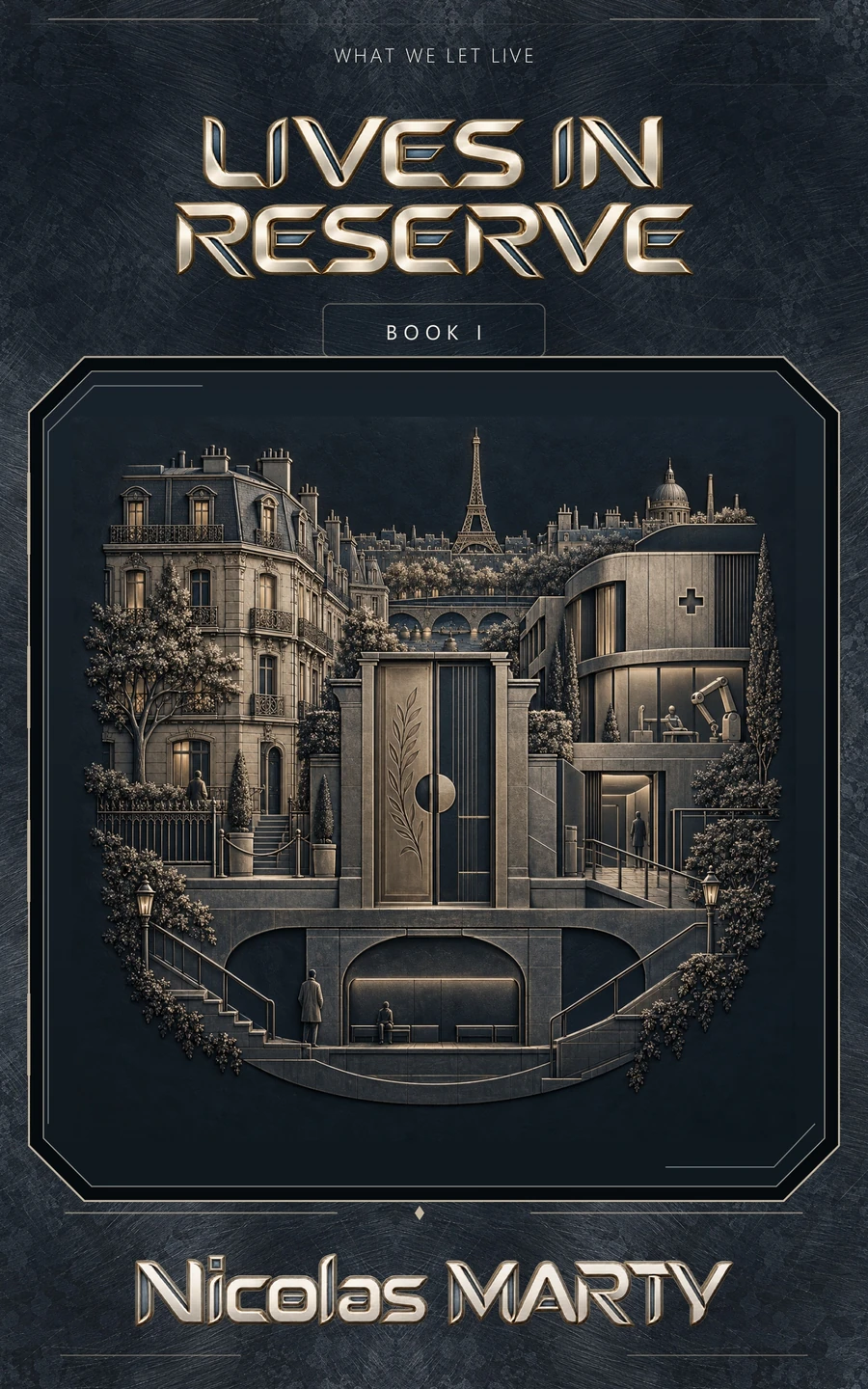
COMING SOON · US ENGLISH EDITION
What We Let Live · Volume 1
Progress saves lives. Whose lives come first?
Paris, 2046. Robots deliver groceries, repair buildings, and help care for the sick. Medicine can do things that once seemed impossible. Yet every advance comes with a question that rarely appears in the advertisement: who qualifies?
Coming soon · US English edition
Also coming soon in French
Les vies de réserve →ENTER THE STORY
Explore the collection: Forthcoming books
Nora Delmas, her estranged husband Lucien, and Garance Veyrac approach the same system from different sides. For one, it is a place to work. For another, a trail of decisions. For the heiress, it is an inheritance inseparable from her survival. Their choices bring a public crisis into the intimate space between people who need one another.
Delivery rounds, appointments, rent, and work still shape the day. Robots handle more of the tasks; families bear the cost when a service, a contract, or a promise fails.
Advanced medicine can keep a person alive for years. Access can hinge on employment, insurance, or the right name. A technical decision becomes a family’s most intimate crisis.
Technology preserves traces of a life. Families and institutions give those traces meaning. Between remembrance and possession lies a question no machine can settle for them.
Find your next read
Meals arrive, robots work and clinics promise care. The future of this trilogy looks like an everyday world that functions, until someone is shut out. Nora discovers a patient without protection; Lucien, Alma and Garance face decisions that implicate them in different ways.
Begin here if you enjoy social speculation told through a family, its attachments and its responsibilities. The first volume opens an investigation whose stakes reach into private relationships as well as structures of power. It begins a continuing story across three books.
Explore the illustrated presentationTHE PLEASURE OF READING
What We Let Live is a literary dystopian trilogy about care, class, family, and the people we allow ourselves to sacrifice. Read in order: Lives in Reserve; The Tenderness of Executioners; The Claims of the Absent.
THE ILLUSTRATED A+ PRESENTATION
Nora knows how to care for a patient. Lucien knows how to follow a record. Neither can keep the investigation outside their home. As a citizens’ revolt gathers force, the protections they depend on become part of the truth they are trying to uncover.

Nora Delmas, her estranged husband Lucien, and Garance Veyrac approach the same system from different sides. For one, it is a place to work. For another, a trail of decisions. For the heiress, it is an inheritance inseparable from her survival. Their choices bring a public crisis into the intimate space between people who need one another.
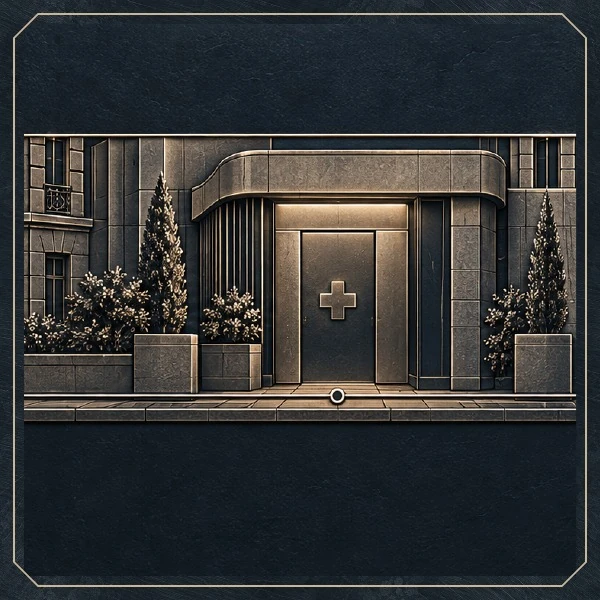
Delivery rounds, appointments, rent, and work still shape the day. Robots handle more of the tasks; families bear the cost when a service, a contract, or a promise fails.
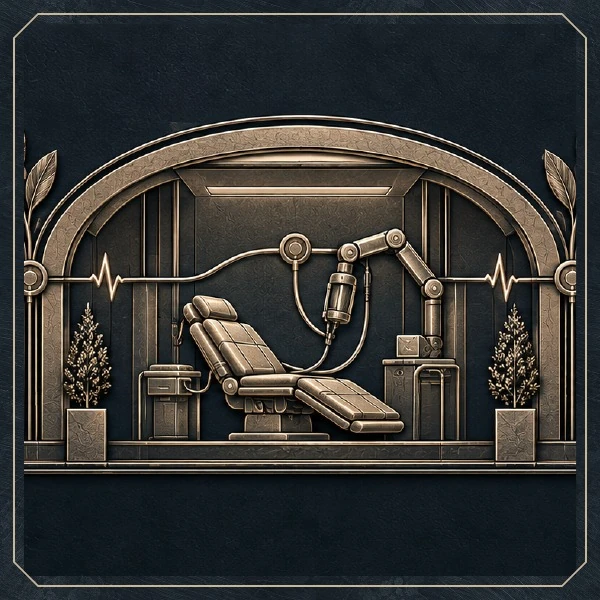
Advanced medicine can keep a person alive for years. Access can hinge on employment, insurance, or the right name. A technical decision becomes a family’s most intimate crisis.
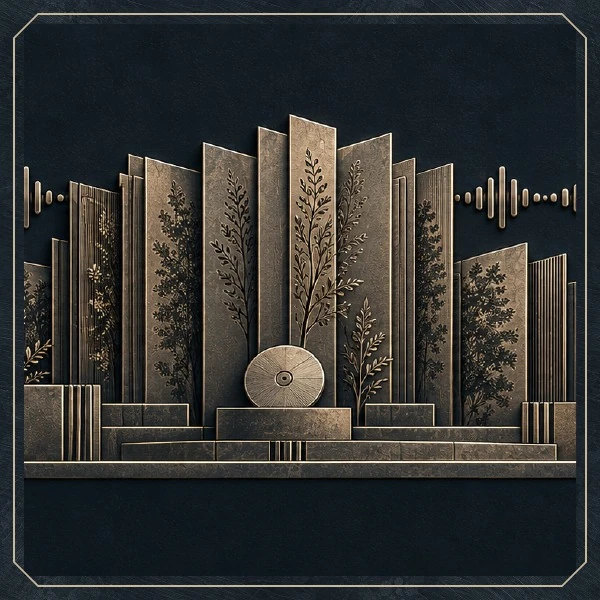
Technology preserves traces of a life. Families and institutions give those traces meaning. Between remembrance and possession lies a question no machine can settle for them.
The woman had laid her shoes on her stomach.
Nora looked at them before she looked at her face: two white sandals, the strap on the left one held together with blue thread. The gurney almost touched the one beside it. To make room for the medical cart, someone had pushed the chairs against the old school lockers, and those well enough to sit up had begun holding their bags between their knees. In the next room, someone was asking for a phone charger. He had tried asking quietly three times.
“You can put them beside you,” Nora said.
The woman moved her eyes without turning her head.
“Where?”
Nora took a clean underpad from the compartment the robot held out to her, folded it over a stool, and set the sandals on it. The left one tipped over. She straightened it. All evening, they had been making room for an elbow, a bag, a pair of shoes; now the stool was blocking the aisle.
From Chapter One, “Madeleine’s File,” in Lives in Reserve.
BOOK 1 · USParis, 2046. A patient’s file draws the Delmas family into a conflict over who receives the benefits of progress.
Coming soonExplore the A+ presentation →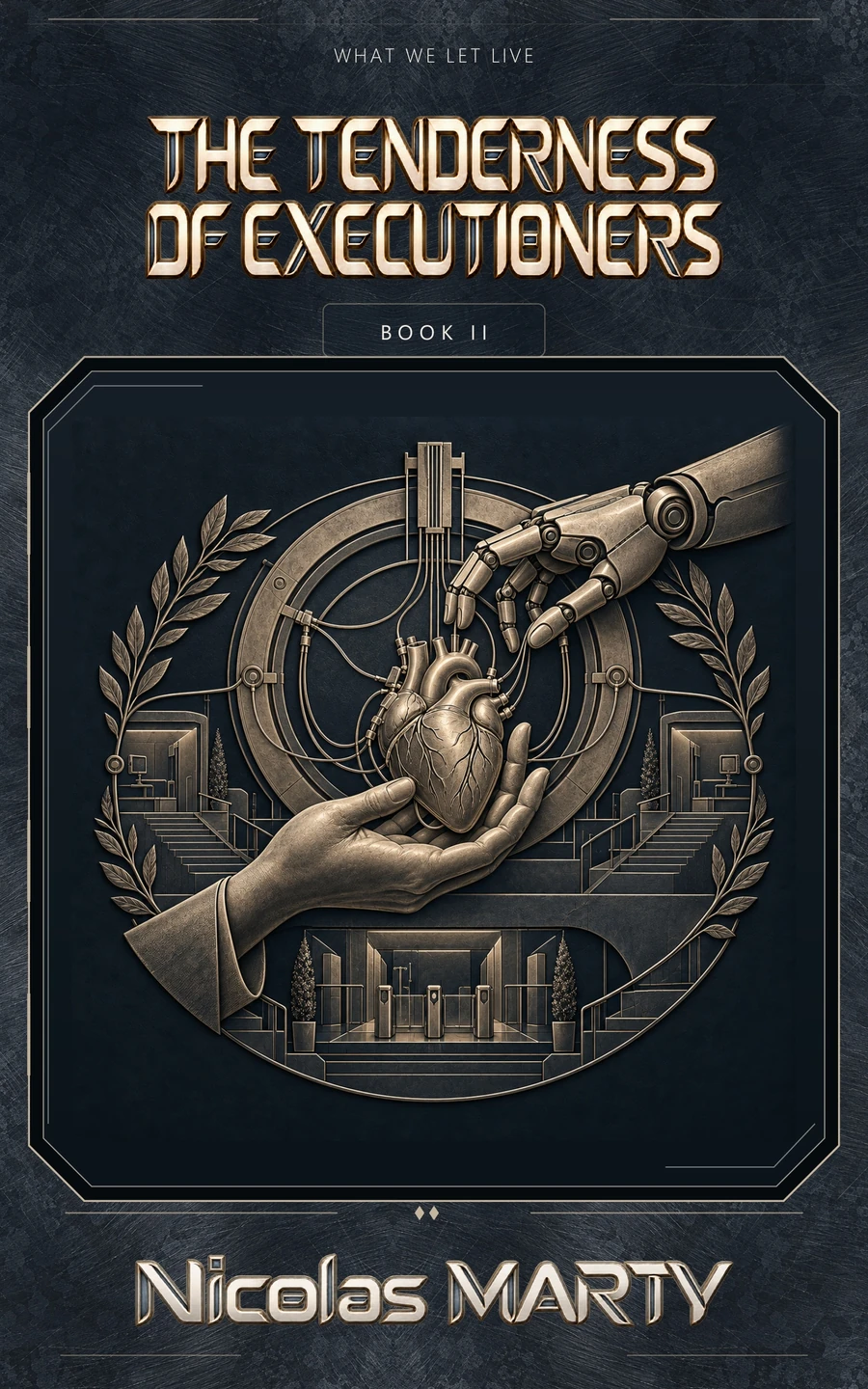 BOOK 2 · US
Paris, 2047. The revolt faces the burdens of power, and protecting loved ones carries a growing public cost.
Coming soonExplore the A+ presentation →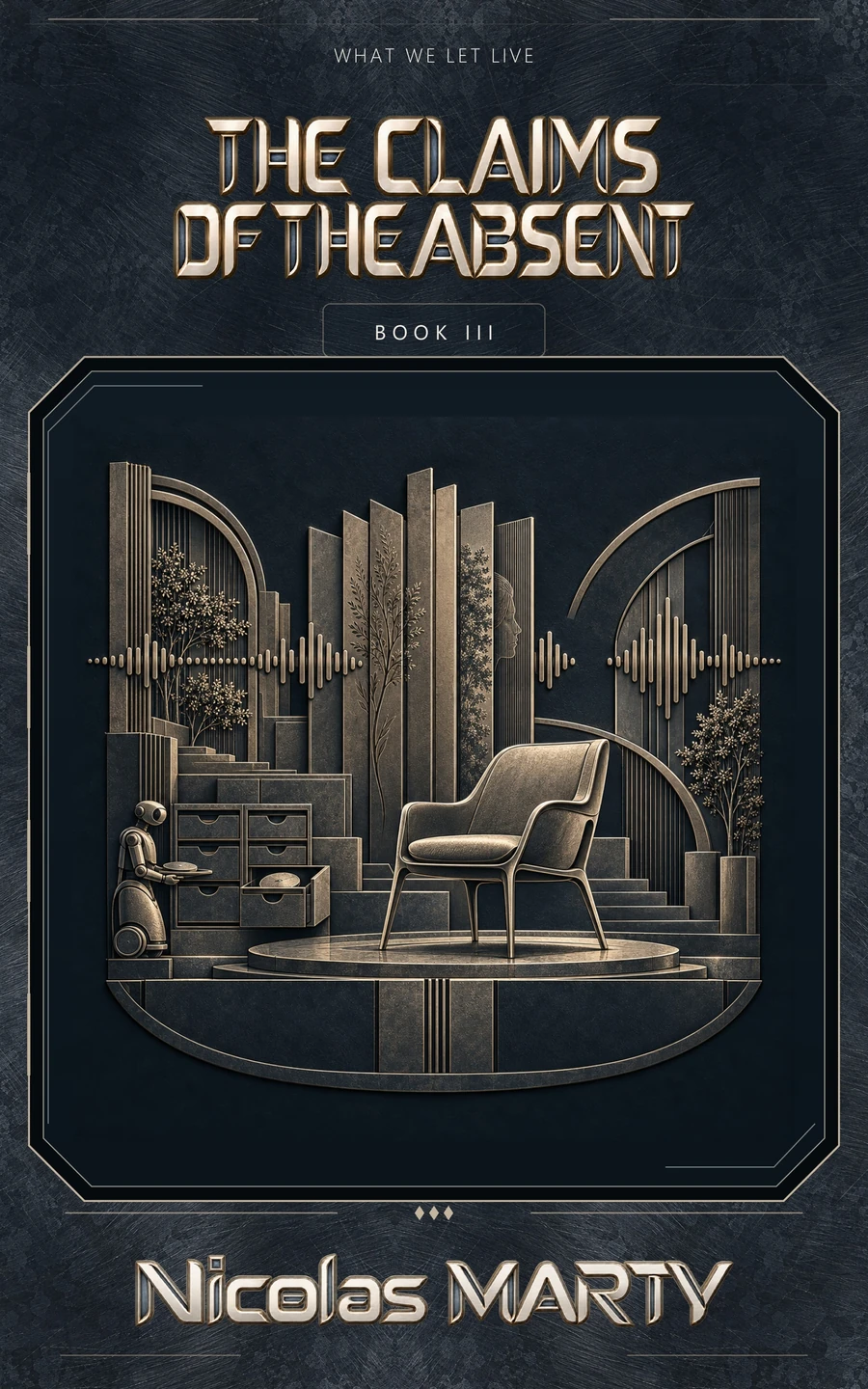 BOOK 3 · US
Paris, 2048. Preserved voices and contested evidence force the living to confront what they owe the absent.
Coming soonExplore the A+ presentation →BEFORE OPENING THE BOOK
The US English edition is coming soon. No release date or preorder has been announced. Its Amazon link will be added after publication.
This is the American English edition of the novel. The French edition has a separate presentation linked above.
Lives in Reserve → The Tenderness of Executioners → The Claims of the Absent.
The artwork accompanies the book’s A+ presentation. It evokes its setting and themes; it does not reproduce the novel’s interior.
YOUR NEXT BOOK
The book is in preparation. Return here for publication information.
Also coming soon in French
Les vies de réserve →A reprieve does not guarantee a protected life. In 2047, Nora’s family discovers what a promise can cost when care comes with conditions.
For reading The Tenderness of Executioners in American English.
Coming soon · US English edition
Step into the story →Also coming soon in French
La douceur des bourreaux →Care has changed, but not everyone benefits. Alma must act while archives threaten to unsettle the very people who wanted to change the system.
For reading The Claims of the Absent in American English.
Coming soon · US English edition
Step into the story →Also coming soon in French
La part des absents →